
Listen to this post: First Time Going Back Home After Relocating: Mixed Feelings at the Airport
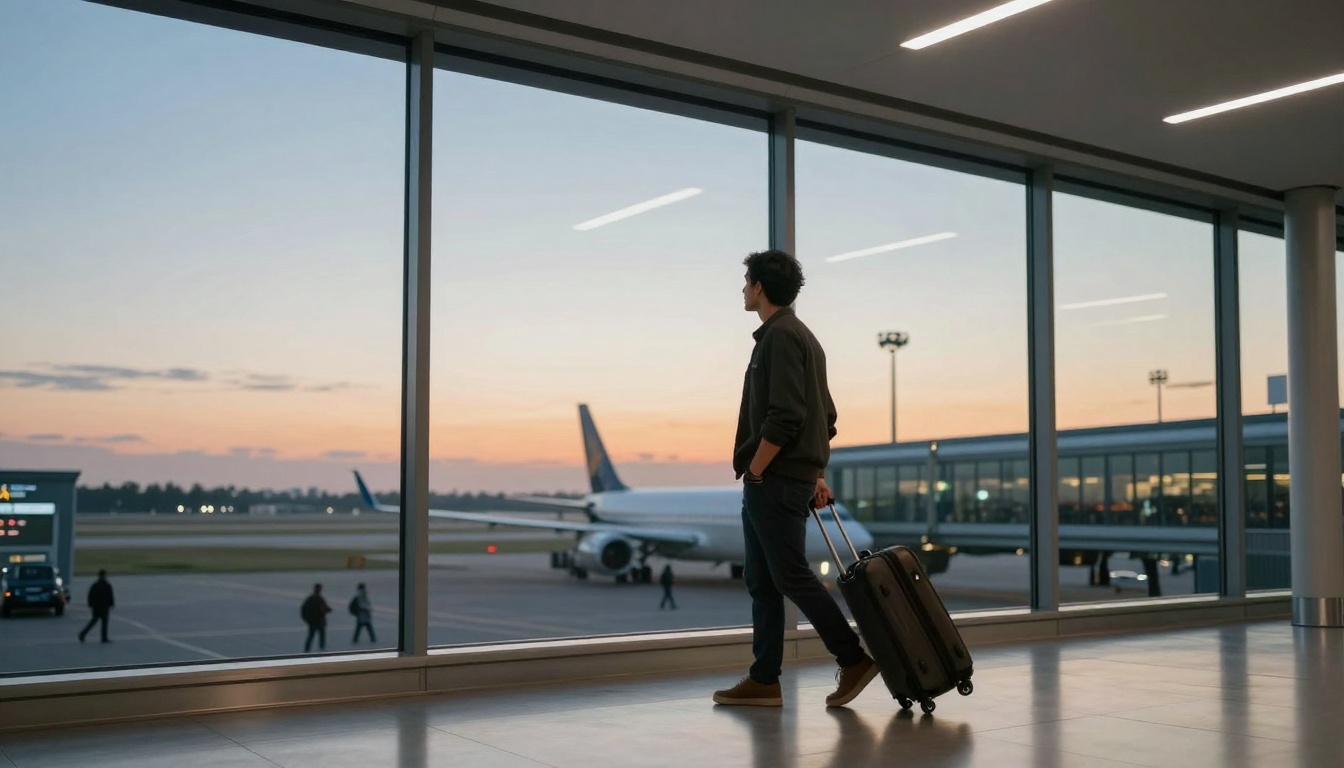
The airport always looks the same, until it doesn’t. Fluorescent lights that make everyone a bit pale, queue lines that zig-zag like a test of patience, boarding calls that cut through your thoughts mid-sentence. The smell of burnt coffee clings to your coat. Somewhere nearby, a suitcase wheel clicks like a metronome.
This is your first time going back home after relocating, and it should feel simple. You booked the flight, packed the gifts, charged your phone. Yet your chest is tight, and your mind won’t settle. You’re going “home”, but the word has started to split into two meanings.
At the gate, you can feel it all at once: excitement, pride, grief, guilt, worry. You might even feel nothing, which can be its own kind of fear. Everyone around you is just travelling. For you, this trip feels like a small reckoning, with an assigned seat and a departure time.
Why the airport hits so hard when you’re going back home for the first time
Airports are built for movement, but they’re also built for endings. Even if you’re not leaving forever, your body still reads it as a border. You walk in as the person who lives “there”, and you walk out as the person who belongs “here” again, at least for a while.
That boundary shows up in tiny ways.
At passport control, you hand over a document that proves where you’re allowed to stand. At check-in, a baggage tag gets wrapped around your suitcase like a label on your life. At security, you’re asked to take off your shoes and empty your pockets, as if you can also empty your history.
Then there’s sound. You hear your home accent in the queue and it lands in your stomach, familiar and strange. You catch a phrase you haven’t heard in months, and it’s like someone’s turned the volume up on a past version of you.
This is also where reverse culture shock often starts to surface. In plain terms, it’s the disorientation some people feel when they return to their home country after living abroad. You expect it to fit like it used to, but it doesn’t, and neither do you.
Research doesn’t give one neat global number for everyone, but studies and support guides agree it’s common for returnees. One often cited paper on students returning from overseas reports that around 70% experienced some level of reverse culture shock (even if it didn’t look dramatic on the outside), which matches what many people quietly describe in real life (a low hum of “offness” that’s hard to name). You can see the academic reference here: https://www.sciencedirect.com/science/article/abs/pii/S0147176799000243
What makes the first return trip harder is the expectation gap. You think you’re going back to a place that waited for you. But home didn’t pause. People kept living, changing jobs, falling out with neighbours, redecorating, getting older. And you did too, just somewhere else.
If you want a more personal angle on why coming home can sting, this piece captures the emotional side without dressing it up: https://danieldashnawcouplestherapy.com/blog/reverse-culture-shock-the-science-and-heartbreak
The mix of feelings you might notice at the gate
The airport gate is a pressure cooker for feelings because there’s nothing left to do but wait. Your phone becomes a mirror. Each notification has weight.
Excitement might hit when you get a text from your mum that’s just, “Can’t wait.”
Relief can arrive when you see your seat number and realise you can stop making choices for a few hours.
Sadness can sneak in during a last look at the departure board, like you’re watching your new life flicker behind glass.
Anxiety often turns up as body noise: a racing heart, dry mouth, restless legs.
Guilt can sting when you remember who you left behind, or who you didn’t call enough.
Numbness might show up as a blank calm, like your brain has put everything on mute.
And then there’s the in-between feeling, where you’re not happy or sad, just suspended, like a suitcase on the conveyor belt.
None of these mean you’re ungrateful. They mean this matters.
Reverse culture shock starts before you even land
Your mind time-travels on flights. It runs scenes before they happen.
You picture the first hug and worry it’ll feel wrong. You rehearse what you’ll say, then delete it. You wonder if you’ll be seen as “changed” in a bad way, too opinionated, too quiet, too foreign, too much.
Values can feel like they’ve shifted while you weren’t looking. Maybe you’ve become more independent, more direct, more private. Or maybe you’ve softened. Either way, you might fear being misunderstood, or having to explain yourself with every sentence.
Even the plane ride can feel like a quiet goodbye to who you were abroad. Not because that person disappears, but because you know you’ll become someone slightly different the moment you step into arrivals.
A newer research review on re-adjusting after a stay abroad puts language around this “re-entry” process and why some people find it harder than expected: https://www.sciencedirect.com/science/article/pii/S0147176724001068
What you can do in the airport when emotions start to swing
You can’t control what you feel, but you can control what you do with your body and attention in the moment. Think of it like holding a cup of hot tea. You don’t need to throw it, and you don’t need to pretend it’s cold. You just need a steady grip.
Start with the basics. Airports make it easy to ignore your body until it complains. Hunger looks like irritability. Dehydration looks like panic. Lack of sleep looks like dread.
Also, be careful with the story your brain tells. Mixed feelings don’t mean you made the wrong move by relocating. They usually mean you built a real life in two places, and you can’t be fully in both at once.
Here’s a small toolkit that works in busy terminals:
- Breathing that slows your heart without drawing attention.
- Grounding that anchors you to what’s real (not what might happen).
- Music or audio that acts like a familiar wall around you.
- A notes app for quick, messy journalling, not perfect sentences.
- Food and water checks before you interpret any emotion as a crisis.
- Choosing who to message, rather than replying to everyone.
A quick grounding routine for check-in, security, and boarding
You can do this without anyone noticing. It fits in the gaps, while you shuffle forward in a queue.
- Breathe in for 4, out for 6. Do it five times. Keep your shoulders low.
- Name five things you can see (quietly, in your head). A suitcase handle, a blue sign, a scuffed floor tile, a child’s red coat, a coffee cup.
- Relax your jaw and tongue. Most of us clench without realising. Drop your shoulders. Uncurl your toes in your shoes.
- Drink water. A few slow sips, not a rushed gulp.
- Eat something small if you haven’t. A banana, a yoghurt, a sandwich half. Nothing heroic.
If your thoughts keep looping, add one sentence in your notes app: “I’m safe, I’m travelling, I’m allowed to feel messy.” Write it like a label, not a poem.
Decide what you want your first hour back to feel like
Instead of trying to control the whole visit, choose one feeling for the first hour: calm, connected, or steady.
Then act like that version of you would act.
If “connected” matters, send one short message to a trusted person before you board. Keep it plain:
“I’m flying today. Feeling a bit all over the place. Can we have a quick chat when I land?”
If “calm” matters, make a simple arrival plan that’s kind to your nervous system:
- Toilet break before you meet anyone.
- Fresh air for two minutes outside the terminal, if possible.
- A slow walk, not a sprint to the car park.
- Keep day one light, even if people want “proper plans”.
Try not to make big life decisions on day one. Not “Should I move back?” Not “Have I outgrown everyone?” Let your body arrive before your mind starts judging.
Landing back home: the sweet moments and the strange ones
Homecoming can feel like biting into a familiar food and realising the recipe has changed. It’s still good, but it’s not exactly what you remembered. The first few days can swing between warmth and weirdness so fast it gives you whiplash.
The sweet moments are real. The first proper cup of tea the way you like it. The local jokes you forgot you knew. The corner shop that still sells your favourite snacks. The comfort of hearing street names you don’t have to pronounce carefully.
But the strange moments are real too. You might feel like a guest in your old bedroom. You might notice prices and think, “When did everything get so expensive?” You might feel irritated by the pace, the noise, the small talk, or the way people complain about things you’d love to have had abroad.
The hardest truth is gentle: while you were away, people at home kept living. Relationships can be slightly out of sync, like two songs playing in the same room. You still love each other, but the rhythm is different.
A student-focused study that gathers common experiences after study abroad gives language to that out-of-sync feeling, and why it can surprise people who expected an easy return: https://digitalcommons.bryant.edu/cgi/viewcontent.cgi?article=1012&context=honors_english
Seeing family and friends again when you’ve changed
The first hug can feel too tight, or not tight enough. Sometimes your body goes stiff, even with people you adore. It’s not a sign you’ve stopped loving them. It’s just your nervous system catching up.
Small talk can feel thin. “How was it?” is a huge question disguised as a small one. You might freeze, or you might talk too fast, trying to fit years into five minutes.
Some friends won’t ask much. Others will expect you to be the old you, like you’ve been paused on a shelf. A few might be curious in a way that feels like an interview.
Try this gentle approach:
Share one story you actually enjoy telling, rather than a highlight reel.
Ask them questions too, even if you’re bursting to talk about your life abroad.
Don’t take it personally if people don’t “get it” straight away. They can’t miss what they never lived.
Pick one or two safe people for deeper chats, the ones who can handle your mixed feelings without turning it into advice.
If you feel judged, remember that change can make others uneasy. Your growth reflects time passing, and not everyone likes that mirror.
Feeling like a tourist in your own place
You might suddenly notice social rules you never saw before. The way people queue, the way they greet, what counts as polite, what counts as cold. Transport might feel easier or harder than you remember. You might catch yourself converting prices into your “new” currency out of habit.
Annoyance can sit right next to love. You can miss your life abroad and still be happy to see your niece. You can feel grateful and restless in the same afternoon.
Two coping ideas that help without forcing a smile:
Keep a “noticing list” in your phone. Not a complaint list, just observations. “Everyone talks louder here.” “I forgot how early it gets dark.” It helps your brain process change without turning it into drama.
Revisit one comfort place on purpose, a park bench, a library, a café. Go alone if you can. Let your body remember, without performing for anyone.
How to make the return visit easier, and when to get extra support
The first visit home after relocating isn’t a test you pass or fail. It’s re-entry. Give it the same respect you’d give any big adjustment.
A simple way to lower the pressure is to keep one thread connected to your abroad life while you’re home. That might be a morning routine, a playlist, a daily message to a friend “back there”. It stops your identity from snapping into one shape.
Also, build a re-entry routine, even if you’re only home for a short visit. Your brain likes predictability when everything feels emotional.
A simple first-week plan that lowers the pressure
Keep it small enough to stick to, even when you’re tired.
- Sleep first: early nights for the first few days, even if you wake at odd times.
- One key catch-up per day: one coffee, one dinner, one walk. Not five.
- One solo reset: a bath, a bookshop visit, a quiet run, a long shower with the door locked.
- Gentle movement: stretching, walking, anything that helps your body settle.
- Limit social overload: say yes, then leave before you crash.
- Add a buffer day after the flight, if you can, with no big plans and no “surprise visits”.
You’re allowed to protect your energy, even from people you love.
Signs you might need more help than a good chat
Sometimes reverse culture shock and travel stress tip into something heavier. Get extra support if you notice:
- Ongoing sadness that lasts for weeks.
- Panic or constant dread, not just nerves.
- No interest in anything, even things you usually like.
- Big sleep changes (hardly sleeping, or sleeping all day).
- Feeling stuck and unable to handle normal tasks.
In the UK, a good first step is speaking to your GP. Counsellors can help too, as can workplace or university support services. You don’t need a “big enough” reason to ask for help.
Conclusion
Back at the airport, the lights still hum, the queues still crawl, and the coffee still smells like burnt hope. But you’ll notice something else too: you’re not the same person who left, and that’s the point.
The first time going back home after relocating often comes with mixed feelings because you’ve built a life that matters. Mixed feelings aren’t failure, they’re proof of attachment in more than one place.
Treat this trip like re-entry, not a performance. Drop the idea that you must feel one clean emotion from start to finish. Today, do one small thing that helps: write three expectations to let go of, or text one trusted person and tell the truth in one sentence.