




Listen to this post: Fireworks AI’s Breach Spread to Notion, Exposing Users’ Private Chats
Last updated: 20 November 2026. Figures and quotes below are sourced to the primary disclosures and reporting linked inline throughout.
The 60-second version
- Fireworks AI, an infrastructure company that runs inference and fine-tuning for other products’ “AI features,” disclosed two separate breaches in autumn 2026 — one involving stolen credentials, the other triggered by a hack at one of its own cloud providers.
- The second incident gave an intruder access to Fireworks’ development machines, exposing billing records for every account created before 30 October and, for a smaller number of customers, model weights and datasets.
- One of those customers was Notion. Fireworks initially told Notion the exposed dataset was synthetic test data; on 8 November it confirmed that real customer data — including the full text of some users’ AI chats — had in fact been accessed.
- Notion says fewer than 1% of its workspaces were affected and has disabled the “Insights” feature that generated the exposed chat data.
- The case is a clean example of a specific, under-discussed risk: a vendor’s contractual “zero data retention” promise is not the same as a verifiable architectural guarantee.
Key dates and numbers
| Date (2026) | What happened |
|---|---|
| 3 Aug – 7 Oct | First Fireworks breach window: an attacker used stolen internal credentials to access environment variables — including API keys and tokens — in a limited number of customer evaluation jobs |
| 6 Oct | Fireworks says it identified and contained the first incident |
| 9–10 Oct | Affected customers notified; employee API keys rotated; first public bulletin published |
| 23 Oct | A third-party cloud provider hosting Fireworks’ R&D machines suffers its own breach |
| 24 Oct | The intruder uses that access to reach Fireworks development machines and run a workload; Fireworks says it detected this the same day |
| 25 Oct | Fireworks says it has found no further evidence of unauthorised access |
| Before 30 Oct | Window for exposed account and billing data (addresses, invoice history, account balance, credit usage) — affecting every account created before this date |
| 2 Nov | Fireworks alerts Notion to an exposed dataset, initially describing it as synthetic test data only |
| 3–4 Nov | Notion disconnects from Fireworks and has vendor-side data deleted |
| 6 Nov | Fireworks tells Notion the dataset may after all include real customer data |
| 8 Nov | Fireworks confirms the final impacted dataset, including Notion chat content, was in fact accessed |
| 9 Nov | Fireworks publishes a bulletin widening the scope of the second incident to billing data for every account created before 30 October, plus secrets, datasets and incomplete model weights for “a small number of customers”; says its investigation with Palo Alto Networks’ Unit 42 is continuing |
| 17 Nov | Fireworks publishes an updated bulletin describing two separate incidents; says Unit 42 has completed its forensic investigation of the first (credential-theft) incident and calls it “contained and remediated,” and that the second incident — under review by a named firm, AprosSyber — is “also contained and remediated” |
What actually happened, in plain terms
Fireworks AI is not a household name, which is part of the story. It is one of a handful of companies that sell the inference and fine-tuning infrastructure other products quietly plug into so they can ship an “AI feature” without building a model-serving stack themselves. Fireworks’ own security bulletin page now lists two incidents from the past few months, and reading them in sequence tells a more complete story than either one does alone.
The first began with stolen internal credentials being used to pull environment variables — the kind of file that holds API keys and access tokens — out of a limited number of customer evaluation jobs. Fireworks says it caught and contained that one within hours of detecting it in early October. In its 17 November update, Fireworks revised the scope of this first incident upward, disclosing that it also exposed secrets, model files and datasets for “a small number of customers,” and that Palo Alto Networks’ Unit 42 has since completed a forensic review and calls the incident “contained and remediated.”
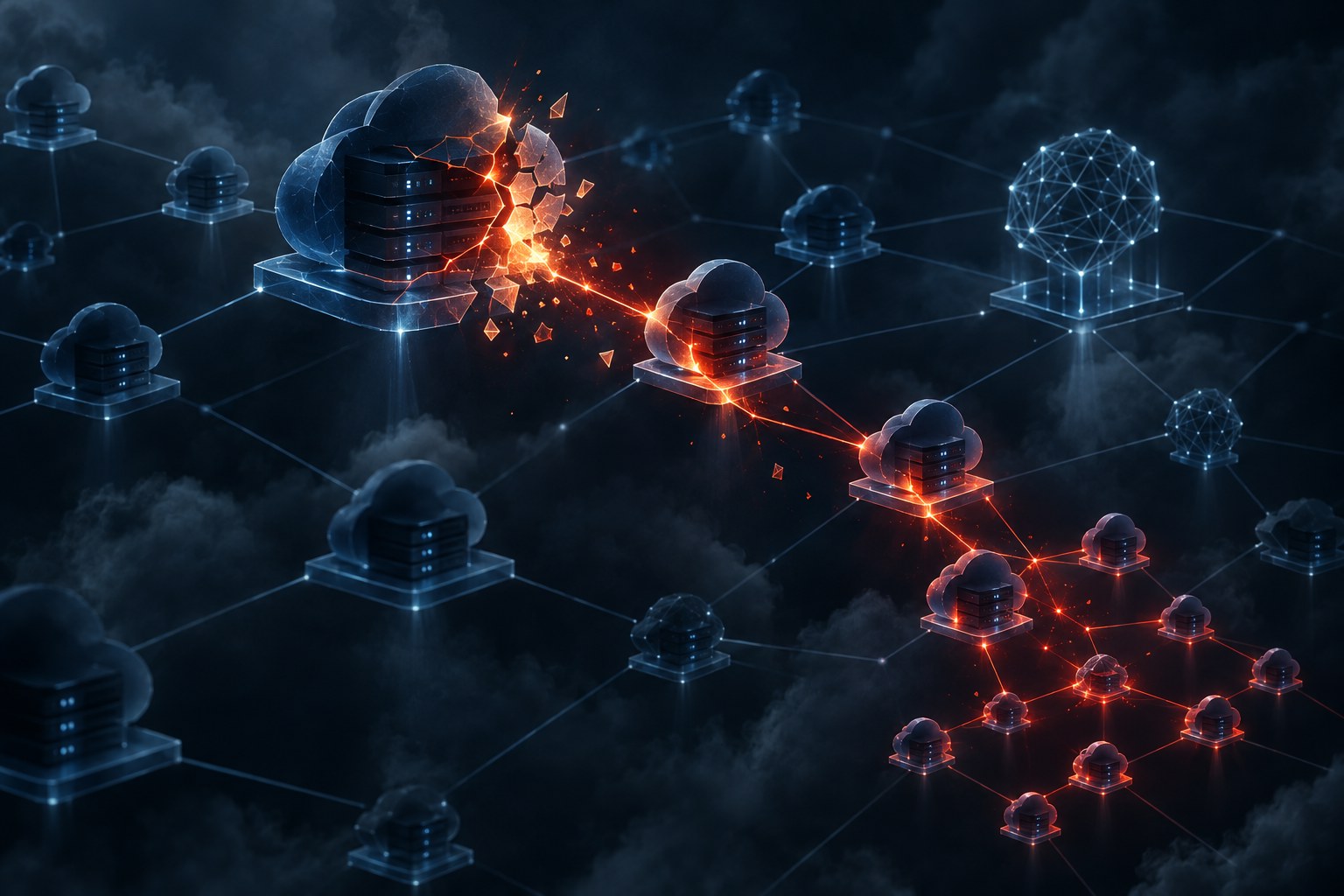
The second incident is the more consequential one, and it did not start inside Fireworks at all. On 23 October, a cloud provider hosting some of Fireworks’ own R&D machines was itself breached. The attacker pivoted from that compromised infrastructure into Fireworks’ development environment the next day and ran a workload there. Fireworks says it noticed the activity immediately and found no further access after 25 October — but the damage from that one day was broader than the first incident: account and billing records for every customer who had signed up before 30 October, plus model weights and datasets belonging to a smaller set of customers.
Fireworks has linked the intrusion to a financially motivated group it associates with LLMjacking — the practice of stealing access to someone else’s paid AI infrastructure and reselling or exploiting it, a trend Google’s Threat Intelligence Group documented in a 2 November report. That report is general industry research, not an investigation into this incident specifically, but it shows why a credential-and-infrastructure breach at an AI vendor is now a recognisable, repeatable crime rather than a one-off.
How this reached Notion’s users
Notion used Fireworks to power a feature called Insights, which classified and processed text already typed into Notion’s AI chat tools, and to serve some open-weight models. On 2 November, Fireworks told Notion that a dataset tied to that work had been exposed — but described it, at the time, as synthetic test data with nothing real in it. Notion cut the connection anyway and had Fireworks delete its copy of the data within the following two days.
That caution turned out to be justified. On 8 November, Fireworks confirmed the dataset was not synthetic: it contained real customer data, including Notion users’ chat content. According to Notion’s own security advisory, what was exposed was the full text of chat messages and AI responses that had passed through Insights, not the tool-call results behind them. Notion states plainly that no other Notion feature — including AI Meeting Notes — was affected. For what Notion calls “the vast majority” of affected workspaces, the chats carried no attached user or workspace identifier — a meaningful mitigating detail, though not an absolute one, since chat content itself can be self-identifying.
Notion says fewer than 1% of its workspaces were affected and has emailed everyone it has identified as impacted. It has disabled Insights outright and is telling affected users to check a security-incident review panel in their workspace settings, download a record of what was exposed, and rotate any credentials or secrets that may have been pasted into a chat.
What most coverage is leaving out
The immediate headlines framed this as “Notion users’ AI chats leaked,” which is true but incomplete. The more useful story is the gap between what Fireworks told Notion on 2 November and what it admitted on 8 November. A vendor’s first assessment of its own breach — “this dataset is synthetic, nothing to see here” — was wrong, and it took six more days for the real scope to surface. Readers should treat every company’s own incident bulletin, including the ones linked throughout this piece, as a snapshot of what that company currently believes, not a final account; Fireworks revised its own narrative twice more, on 9 November and again on 17 November.
The second thing largely missing from coverage is what “zero data retention” actually means contractually versus architecturally. Fireworks’ own bulletins say its Inference, Training SDK and Nexus products are “zero data retention (ZDR) by default” and were not affected by either incident — but that claim was never designed to cover what actually leaked: environment variables from evaluation jobs, account and billing records, and, per the 17 November update, secrets, model files and datasets belonging to “a small number of customers.” Those categories sit outside the specific products Fireworks’ ZDR claim describes. That is not necessarily evidence of bad faith; retained logs, evaluation datasets, and debugging artefacts are exactly the kind of operational residue that can exist even when a company’s customer-facing promise is “we don’t retain your prompts.” But it is a sharp illustration that a retention promise is scoped to particular products and pipelines, not a blanket guarantee covering everything a vendor touches — a distinction this site has flagged before when looking at the volume of AI security incidents piling up across the industry this year.
It is also worth placing this alongside other AI-vendor incidents CurratedBrief has covered recently. Where California’s new suit against OpenAI and OpenAI’s own account of the Hugging Face breach concern an AI company’s agents causing damage to someone else’s systems, the Fireworks case runs the other direction: a breach at an infrastructure vendor cascading downstream into its customers’ customers. It is the same supply-chain shape that showed up when Anthropic disclosed a fourth Claude-related breach earlier this autumn — incidents that are individually survivable but collectively suggest the AI supply chain has more weak links than any single vendor’s dashboard will show you.
Practical takeaways for builders and publishers
If your product embeds a third-party AI vendor — for inference, fine-tuning, moderation, or classification — this incident is worth an afternoon of homework rather than a shrug. Ask any vendor you rely on for more than a policy page: request evidence of how “zero retention” is implemented, what logs or evaluation datasets exist outside the main data path, and whether an independent audit, not just a self-issued badge, has verified it. Map every feature in your own product that quietly depends on an external inference provider — many teams discover, as Notion’s users just did, that a feature they think of as “ours” is actually someone else’s infrastructure wearing their UI.
Treat a vendor’s first incident bulletin as provisional rather than final, since this case shows the real scope can double a week later. And if your product handles user-typed secrets — API keys, passwords, tokens pasted into a chat box for troubleshooting — assume they are retrievable by someone other than your user the moment they’re typed, and build credential rotation into your incident playbook rather than leaving it to users to work out alone. CurratedBrief’s rundown of everyday AI privacy habits is a reasonable starting checklist for the end-user side of the same problem.
What we still don’t know
- Exact numbers. Fireworks has not published how many customer accounts, datasets, or model files were affected, using only phrases like “a small number” and “a limited number.” No regulator or third-party auditor has published independent scope verification as of this writing.
- Why the first assessment was wrong. Fireworks has not explained why the dataset it handed Notion on 2 November was initially, and incorrectly, characterised as synthetic.
- Which other Fireworks customers were affected. Notion is the only customer named publicly so far; Fireworks’ bulletins refer to “customers” in the plural without naming them.
- The attacker’s identity. Fireworks links the second incident to a financially motivated actor associated with LLMjacking patterns, but has not confirmed a specific named group or whether the same actor was behind both incidents.
- Whether “unattributable” chat data is truly impossible to re-identify. Most exposed chats reportedly lack attached user or workspace metadata, but chat content itself — names, project details, email addresses typed into a conversation — can still identify a person without a formal identifier attached.
FAQ
Was my Notion data part of this breach?
Notion says it has directly notified every workspace it has identified as affected, and that the figure is under 1% of all workspaces. If you have not received a notice, check the security-incident review panel in your workspace settings to confirm.
What exactly was exposed?
For affected workspaces, the full text of chat messages sent to Notion’s AI tools and the AI’s responses, where that content had passed through the now-disabled Insights feature. Tool-use calls and underlying search results were generally not included, and most exposed chats were not tied to an identifiable user or workspace, according to Notion.
What is LLMjacking, and why does it matter here?
It is the theft and resale or exploitation of access to paid AI infrastructure — stealing someone else’s AI compute and API access rather than money directly. Fireworks has linked its second breach to an actor it associates with this pattern, which Google’s threat-intelligence researchers describe as a growing, organised criminal business model.
Should I stop using products that rely on third-party AI vendors?
Not necessarily — nearly every AI feature you use is built this way. The more useful response is to rotate any password, API key, or token you may have pasted into an AI chat box, treat vendor “zero retention” claims as a starting point for questions rather than a guarantee, and pay attention when a company discloses an incident rather than assuming “contained” is the end of the story.
Sources
- Fireworks AI — Security Bulletins (primary, company disclosure)
- Notion — Security advisory: incident involving a third-party AI vendor (primary, company disclosure)
- Google Cloud Threat Intelligence — “LLMjacking: Monetizing Compromised Cloud Models” (primary research)
- BleepingComputer — “Fireworks AI discloses new breach after cloud provider hack”
- BleepingComputer — “Notion says Fireworks breach exposed customer AI chat transcripts”