
Listen to this post: Global Competition for AI Talent and Brain Drain Risks
Picture this: packed conference halls in San Francisco where tech bosses bid millions for a single AI whizz. Online auctions rage as firms snatch coders from rivals. Countries join the fray too. The global competition for AI talent pulls experts like magnets. Nations chase scarce brains, but losers face empty labs and stalled dreams.
Demand explodes. Firms need AI pros yesterday, yet supply lags. Just 518,000 qualified folk chase 1.6 million jobs worldwide in 2026. That’s a 3.2-to-1 gap. Powerhouses like the US and China lead the pack. They dangle fat pay cheques and easy visas. Weaker spots bleed talent. Campuses back home sit quiet while labs abroad buzz.
This tug-of-war sparks brain drain fears. Top minds flee for better gigs, leaving gaps that hurt growth. Can the world handle such uneven flows?
Top Destinations Drawing the World’s Best AI Minds
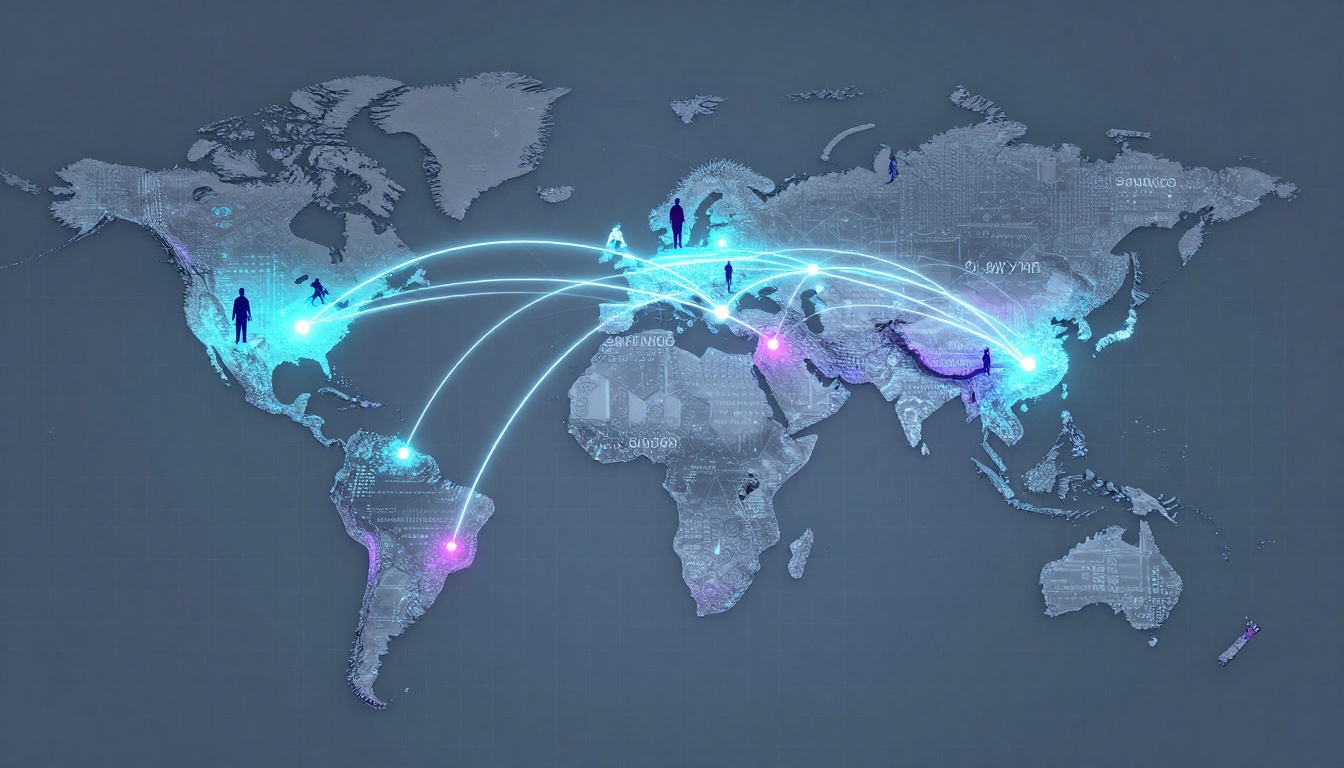
The map of AI talent lights up in key spots. The US grabs 35% of global skills. Hubs like San Francisco, Seattle, and New York pull crowds with venture cash. In 2024, US investors poured $109 billion into AI. That cash funds labs packed with fresh faces from abroad.
China ramps up too. Beijing and Shanghai build sovereign AI stacks. They lure locals and poach globals with state backing. Singapore packs punch despite size. Its talent density tops charts, especially for natural language pros. Firms there scramble for hires.
The UK shines in machine learning. Oxford and Cambridge feed London firms. Canada bets big on robotics in Toronto. Visas flow easy. Israel sparks with defence tech. South Korea pushes chips and bots. The UAE flashes tax perks in Dubai. Germany crafts precise systems in Munich. India scales cheap remote work from Bengaluru.
Relocation surges to these hot zones. Workers eye high-job cities. Singapore firms ache for more NLP experts. US tech giants use AI agents to scout and snag. Fresh 2026 data shows shortages bite hardest in dense hubs. Demand outstrips locals everywhere.
US and China Dominate the Talent Pull
The US rules with top unis and cash floods. Stanford and MIT churn stars. Yet outflows grow. See the Zeki report on top 800,000 AI workers, which flags shifts abroad. Salaries soar. US AI roles pay 67% above average tech gigs.
China counters hard. Investments surge. Homegrown talent stays put, bolstered by hubs. They match US pull in volume, but focus inward. Both offer sky-high pay amid scarcity. Workers flock for the premium.
Emerging Hubs Like Singapore and the UK Step Up
Singapore boasts top talent per square mile. Tax breaks and visas draw crowds. UK machine learning draws from DeepMind roots. London labs hum.
Canada’s visas shine for robotics fans. Toronto pulls steady. India’s remote edge lets Bengaluru coders join US teams cheap. Workers move for stability, pay bumps, and gear access. These spots fill gaps left by giants.
What Fuels This Fierce Chase for Skills
Gaps drive the hunt. Only 2% of workers count as AI pros. Yet 1.3 million new jobs loom. By 2030, data scientists jump 34%. Firms face 90% skills shortfalls. That could cost $5.5 trillion globally by 2026.
Visas grease wheels. US H-1B and Canada’s streams import brains. Poaching thrives. AI recruiters screen 80% of hires. Tales abound of overnight offers. One firm built a global squad via Vietnam remote links.
Salary wars rage in hotspots. AI jobs fetch 56-67% premiums. They grow 40% yearly. Remote from India or Philippines plugs holes cheap. New-collar roles open to quick learners.
Companies adapt. They train internals and hire wide. Picture a Seattle lab mixing locals with Manila coders. Trends point to hybrid teams. Still, shortages push boundaries. AI use in firms leaped 220% since 2020, but experts lagged at 39%.
Brain Drain Dangers and Who Feels the Pain
Winners grab, losers ache. The US now loses as many as it gains. 2025 funding cuts hit NSF and NIH hard. Young workers see 13% job dips. China scoops the rest.
Globally, 92 million jobs vanish by 2030, but 170 million bloom in AI. Origin lands suffer most. Labs fade. Research stalls. Economies slow.
Calls grow for fixes. More funding. Smarter visas. Pictures emerge of quiet campuses in Europe or Asia. Gaps widen. Innovation slips.
How the US Flipped from Winner to Worrier
The US once ruled. Now, the Zeki analysis of 800,000 workers shows outflows match inflows. Cuts bite. Policy wobbles push talent out. Rising costs and visa caps add pain. Hubs still draw, but net zero looms.
Ripple Effects on Economies Left Behind
Left-behind spots stall. Innovation grinds down. Starter jobs dry up. AI bubbles threaten. See Europe’s brain drain struggles. Labs empty. Young grads flee. Wider gaps hit growth. Firms offshore more.
Wrapping Up the AI Talent Rush
The scramble for AI brains boosts hubs like the US and China. Yet brain drain stings others. Shortages fuel fierce bids, but uneven flows risk global lags.
Fixes exist. Pump education. Upskill locals. Craft smart visas. Firms must train T-shaped pros, blending depth and breadth. Balanced moves promise shared wins.
Imagine labs linked worldwide, minds flowing free yet fair. That’s the path ahead. Global progress thrives on equity.
Stay sharp on AI shifts. Follow CurratedBrief for daily briefs. What hub calls to you? Share below.