
Listen to this post: Digital Currencies and Payment Systems: Are We Heading Toward a Splintered World?
You’re abroad, you tap your card for a coffee, and the terminal flashes: declined. Your bank app works, your balance is fine, but the payment still won’t go through. Or you’re sending money to family overseas and the “instant transfer” takes three days, with fees you can’t fully explain.
Moments like these are about payment rails, the hidden pipes money travels through. Cards, bank transfers, mobile money, crypto networks, even cash, they’re different rails. For years, many of us could ignore the plumbing because it mostly connected behind the scenes.
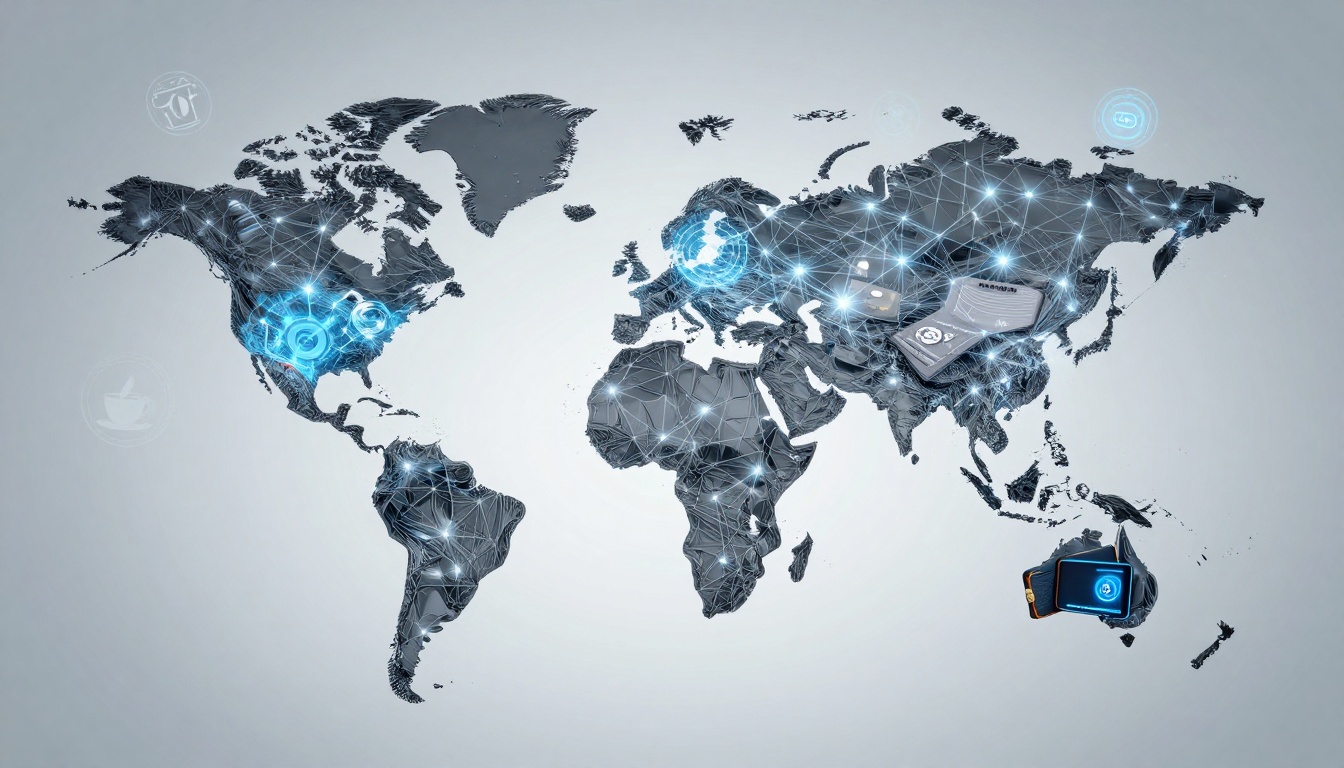
A “splintered world” is what happens when those pipes stop lining up. More systems, more rulebooks, more separate lanes, and less of a one-size-fits-all payment experience. The forces pushing this shift are already visible in 2026: central bank digital currencies (CBDCs), fast-growing stablecoins, sanctions, new tech standards, and the blunt truth that geopolitics now shapes finance more openly.
Why payment systems are splitting, and why it’s happening now
Payment networks don’t split overnight. They split in small decisions that add up: a country wants its own instant-payment backbone, a regulator tightens what’s allowed in a wallet, a bank cuts off a corridor that suddenly looks risky. Then, one day, you notice the seams.
Three changes make 2026 feel different.
First, more states are testing digital money built by central banks, not private firms. Some pilots are retail (for everyday spending), others are wholesale (for big-bank settlement). Either way, it’s governments building new rails and deciding who can connect.
Second, stablecoins are no longer “just crypto”. They’re becoming a serious payment tool for businesses, platforms, and cross-border transfers. With that comes stronger rules. Recent commentary from the World Economic Forum frames 2026 as a pressure point for digital assets, where policy and market structure start to matter as much as tech (digital assets expectations for 2026).
Third, politics is pushing money to find new routes. When relationships sour, payments get treated like infrastructure. Access can shrink fast, not because the technology fails, but because trust and permission disappear.
Governments want more control, faster payments, and less reliance on foreign networks
From a government’s view, payments are like roads and power lines. If too much traffic runs on a route you don’t control, you worry about outages, price shocks, and pressure from abroad. That’s one reason domestic instant-payment systems have spread, and why CBDC projects keep moving even when the public sounds unsure.
The goals are often practical:
- Domestic resilience: fewer single points of failure, less dependence on foreign operators.
- Lower cash costs: printing, transporting, and securing notes is expensive.
- Fraud controls: faster networks can also mean faster fraud, so identity checks tighten.
- Tax and sanctions enforcement: payments are data. Data is power.
Many CBDC designs also connect to digital ID or stronger “know your customer” checks. That can make onboarding and fraud screening quicker. It also raises a hard question: how much of your spending trail should be visible, and to whom?
Political shocks make the risk feel real. A bank can lose correspondent access, a card network can suspend services in a market, or a country can tighten capital controls. For ordinary users, it lands as a simple problem: the card doesn’t work, the transfer bounces, the wallet gets frozen pending checks. The system hasn’t crashed, it’s just changed its mind about you.
Private money is moving too: stablecoins, wallets, and big platforms set their own rules
Stablecoins sound technical, but the idea is plain: a digital token meant to track a currency, often the US dollar or the euro. People use them because they can move 24/7, settle quickly, and cross borders without waiting for bank cut-offs or weekend delays.
That usefulness brings attention. Regulators want to know what backs the coin, how reserves are held, what happens in a run, and who pays when something breaks. Media coverage in early 2026 has focused on governments responding in different ways, from licensing frameworks to tougher limits (how governments are responding to stablecoins).
Stablecoins can connect systems. A freelancer might get paid in a token, convert to local currency, and spend through a card linked to a wallet. In that sense, stablecoins can act like a bridge over broken roads.
But bridges have toll booths. The gatekeepers shift from banks to issuers, wallets, exchanges, and platforms that decide who can hold, move, or redeem. If rules tighten, access can narrow. Fragmentation doesn’t always mean “more freedom”. Sometimes it means your money is usable, but only inside one company’s walled garden.
What a splintered payments world could look like in daily life
In a connected world, you can pay almost anywhere and rarely think about it. In a splintered one, you start planning like a traveller packing adaptors: right plug, right voltage, right socket.
Daily life doesn’t become impossible. It becomes fiddly.
For travellers, the pain is obvious. You might carry a card, a bank app, a global wallet, and a local QR app. Your hotel might accept cards, but the corner shop prefers mobile QR. Your taxi app might only take a local wallet tied to a domestic phone number.
For online shopping, the change is quieter. Checkout pages will show more options, but also more “not available in your region” messages. Some merchants will steer customers into payment methods with lower fraud rates or better chargeback rules, even if it’s worse for the buyer.
For remote workers, getting paid can turn into a puzzle. A client wants bank details, your bank charges for incoming international transfers, and the wallet option triggers extra compliance questions. Nothing is wrong with you, but the corridor is “high-friction”.
For small firms importing stock, settlement risk becomes part of pricing. If a supplier only accepts certain rails, you may need a broker, a pre-funded account, or a new banking relationship. That’s time and cost that larger firms handle more easily.
Under the surface, parallel rails can overlap, or refuse each other. Card rails might still work, but be more expensive. Bank rails might be trusted, but slow. Crypto rails might be fast, but hard to cash out. CBDC rails might be cheap, but limited to approved networks.
More choice on paper, more friction in practice
A splintered system sells “choice”. The reality can be extra steps.
You see it in:
- More apps to keep track of, with different login rules.
- More fees hidden in spreads and conversions.
- Forced currency conversion when a rail insists on settling in its preferred unit.
- Slower off-ramps, when turning digital value into spendable local money takes checks.
- More compliance prompts, because risk teams would rather ask twice than pay a fine.
The same payment can be instant in one corridor and slow in another because each corridor has its own gatekeepers. A bank-to-bank transfer might be fast inside one region, then crawl once it leaves and has to touch correspondent networks. A stablecoin transfer might be instant, then hit delays at redemption because the exchange needs documents, or because local rules restrict conversions.
A simple three-step cross-border payment in a fragmented world might look like this:
- You send funds from your bank to a regulated wallet provider.
- The provider moves value across a token rail (or a partner network) in minutes.
- The recipient tries to cash out locally, and waits for checks, limits, or working hours.
Speed is no longer one promise. It depends on where the bottleneck sits.
Winners and losers: who gains power when rails multiply
When rails multiply, standards become influence. Big economies can push their preferred rules: data formats, identity requirements, dispute processes, and who can participate. Smaller countries may gain options, but also face pressure to choose compatible partners.
Large firms also benefit because they can afford compliance staff, local licences, and multiple banking partners. They can route payments like a delivery company choosing between motorways. A small online shop can’t. It uses whatever its provider offers, and hopes the settings don’t change.
For individuals, the trade-off shows up as friction versus safety. More checks can reduce scams and chargeback fraud. They can also create constant identity hurdles, plus more data trails. Privacy isn’t just about secrecy, it’s about proportionality. If buying a bus ticket starts to look like applying for a loan, something’s off.
Fragmentation does have an upside: it reduces the risk of a single system failure taking down everything. But it also makes mistakes harder to fix. When a payment fails, which rail is responsible, and who do you call? In a world of overlapping pipes, accountability can blur.
The new fault lines: CBDCs, stablecoins, and rival blocs
At the global level, payments are becoming a patchwork. Some countries are close to launching CBDCs, others are piloting, others have paused, and some have decided not to move yet. Stablecoins are spreading fast, but the rules differ by region. That mix creates friction at borders.
A key word here is interoperability, meaning different systems can “speak the same language” and settle with each other safely. Without it, you get islands. With it, you get bridges, but bridges still need shared rules.
Research is already mapping how geopolitical tension can split finance more broadly. A 2025 Geneva Report for CEPR links rising tension to measurable financial fragmentation and its knock-on effects (evidence on financial fragmentation).
The question isn’t whether money will stay digital. It will. The question is whether digital money will stay compatible across borders and blocs, or whether it will behave like mobile networks where roaming exists, but it’s expensive and limited. As consumers increasingly embrace new payment methods, digital wallet benefits for consumers are becoming more apparent. Enhanced security features and the convenience of seamless transactions are driving adoption rates worldwide. Moreover, as technology advances, these wallets are likely to offer even more features, making traditional banking feel increasingly outdated.
CBDCs are multiplying, but they don’t automatically work together
A retail CBDC is central bank money designed for households and businesses to use day to day. A wholesale CBDC is aimed at banks and market firms for settlement between institutions.
Both can improve speed and cut risk inside a country. Cross-border is harder.
Even when two countries both build CBDCs, their systems may not align. They might differ on:
- Standards and messaging: how payment instructions are formatted.
- FX rules: who sets the rate, when, and with what transparency.
- Data sharing: what transaction data travels, and who can see it.
- Cyber security: common defences and shared incident response.
- Access rules: which banks and firms can connect, and on what terms.
In 2026, central banks in Europe and the UK are still in design and preparation phases for potential future launches, while China remains far ahead in live usage and pilots. That uneven pace matters because it creates a world where some rails are mature and others are still being tested.
There’s also a political layer. A CBDC can be built to reduce dependence on foreign payment providers. That’s not a conspiracy, it’s normal statecraft. An academic paper presented through the American Economic Association has even modelled CBDCs as a force that can shift power in the payment industry and add a geopolitical dimension (CBDCs, payment firms, and geopolitics).
Trade and geopolitics are shaping parallel routes for money
Trade runs on trust and settlement. If two countries don’t trust the same rails, they look for alternatives. That can mean local-currency settlement, new messaging links, regional platforms, or token-based settlement tools. Energy and commodity trades matter here because they’re large, frequent, and politically sensitive.
This is where the “splintered world” becomes real. Politics can decide which rails are trusted, monitored, slowed, or blocked. Compliance teams don’t only check fraud, they check sanctions risk, counterparty risk, and reputational risk. If a corridor becomes politically toxic, it becomes operationally expensive.
You’ll hear the term “dedollarisation” used in this context. It often doesn’t mean the dollar vanishes. It means countries want more routing and settlement options so they’re not forced through one set of pipes. A deal can still be priced in dollars, while settlement uses different networks or different intermediaries. The change is about choice and control, not a single dramatic switch.
For businesses, this turns payments into strategy. They may hold more currencies, keep more banking relationships, and negotiate settlement terms like they negotiate shipping. For ordinary people, it’s less grand. It’s the feeling that paying across borders now comes with extra rules, and those rules change faster than you’d like.
Conclusion: fragmentation is under way, but the end state isn’t fixed
A splintered payments world isn’t a distant fear, it’s already forming in small ways: different wallet rules, different stablecoin frameworks, different approaches to CBDCs, and a sharper role for politics in who gets access to what.
The next two years should answer practical questions more than philosophical ones. Watch for CBDC interoperability agreements, stablecoin regulation that starts to align across major markets, new cross-border payment corridors that reduce delays, clearer privacy rules for digital ID-linked payments, and the cyber incidents that will test trust.
For households and small firms, the calm takeaway is simple: keep flexibility. Have more than one way to pay, understand your fees, and don’t assume a payment method will work everywhere just because it worked last month. Rules matter as much as tech now, and hype won’t help when the terminal says declined.