
Listen to this post: Humanitarian Corridors and Ceasefires: Why They’re So Hard to Keep Open
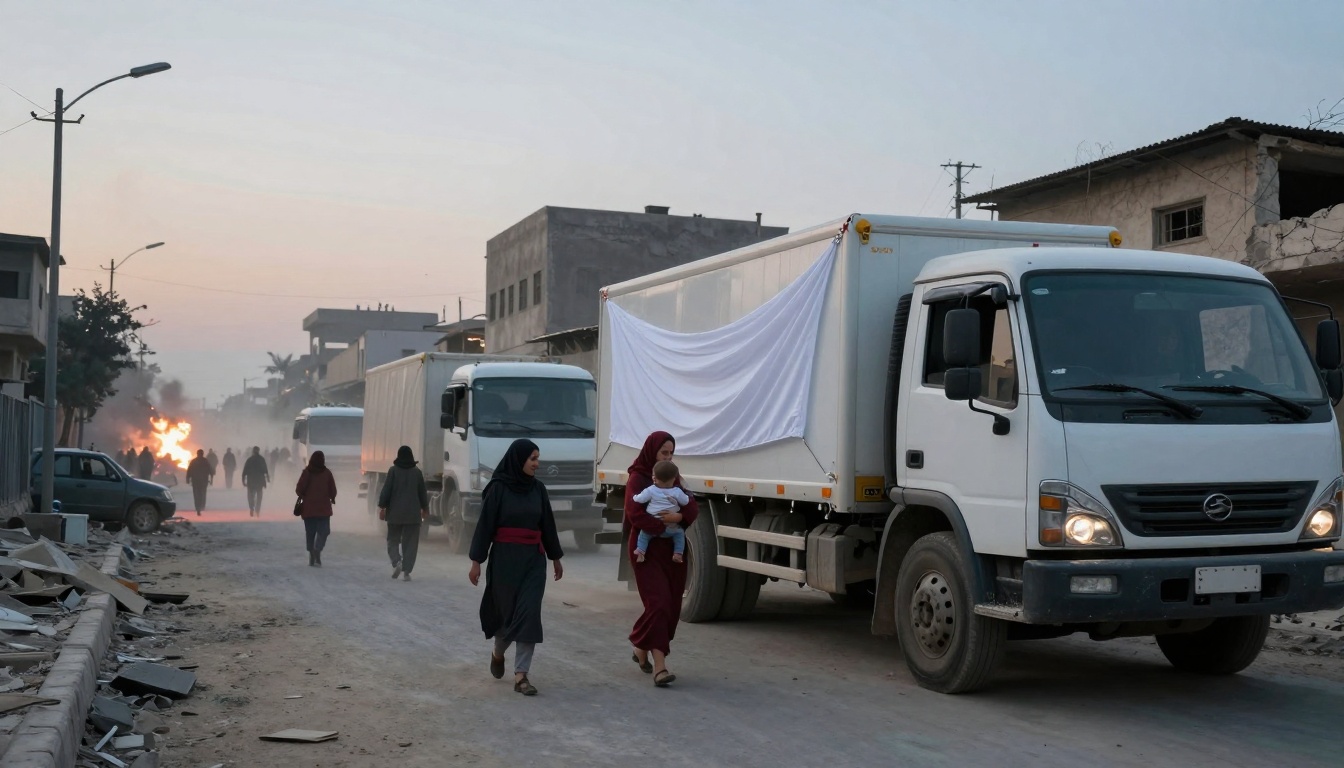
Picture families in Mariupol back in 2022. Shells explode nearby as mums clutch babies and dash towards buses under a flag of truce. Dust chokes the air. These are humanitarian corridors, safe routes carved through war zones for people and aid to slip out. Ceasefires pair with them: brief halts in gunfire to let the paths work. They promise rescue from bombs and hunger.
Yet these lifelines often snap shut fast. Aid trucks idle. People wait in the cold. Global hunger swells; over 20 million tons of Ukrainian grain sat trapped after one deal fell apart. In places like Ukraine and Gaza, lives hang on these fragile pacts. Why do they fail so much? This post digs into real cases from recent fights, pins down the main blocks, spots rare successes, and floats solid fixes. You’ll see clear patterns and steps that could save more lives.
What Are These Lifelines and Why Do We Need Them?
Humanitarian corridors act like emergency bridges over rivers of fire. They open temporary paths in battle areas. Civilians flee. The wounded get out. Trucks haul food, water, and medicine. Picture a line of white buses snaking past checkpoints, horns silent, drivers tense.
Ceasefires make it possible. Both sides agree to stop shooting for hours or days. No drones. No shells. Just quiet to let aid flow. The UN and Red Cross push rules under international law. Geneva Conventions say attacks on these routes count as war crimes. Everyone should know that.
These tools trace back to World War II airlifts. Today, they fight modern crises. In Ukraine, they link to bigger peace efforts. Without them, deaths climb. Starvation bites harder. Hope fades.
They save lives outright. One corridor can move thousands in a day. Aid reaches the trapped, easing pain from bombs and blockade. Kids eat. Sick get drugs. It’s a spark in the dark.
Right now, in January 2026, Ukraine needs them bad. Winter strikes hit cities like Kyiv. UN plans $2.3 billion in aid for millions. Local halts pop up, like in Mariupol for safe passages. But full trust stays low. Corridors tie into talks on prisoners and rebuilds. They buy time for real peace.
For a basic rundown on how these pauses curb violence in fights, check the Council on Foreign Relations explainer.

Photo by Safi Erneste
Heartbreaking Examples from Recent Wars
Take Ukraine in 2022. Mariupol’s corridors let some escape Azovstal steelworks. Buses rolled out under watchful eyes. But shelling hit others. Sumy saw partial wins too. Families crossed lines amid cheers and tears. Then the Black Sea Grain Deal in July 2022. It freed ships with 20 million tons of food. Russia pulled out by November, citing its own blockades. Hunger spread worldwide.
Fast forward to Kursk in 2024 and 2025. Ukraine pushed in. Russia set border corridors. Trucks waited hours at crossings. Delays piled up. Aid spoiled in the sun.
Syria’s Aleppo in 2016 tells a grim tale. Rebels held east Aleppo. Routes opened for civilians. Hours later, bombs fell on them. Over 100 died. UN called it a betrayal. Trucks turned back, horns blaring empty streets.
Yemen faced the same in 2018. Hodeidah port truce let ships dock. Shells soon flew from both sides. Saudi-led forces and Houthis pointed fingers. Food rotted on piers while kids weakened.
Gaza’s pauses in 2023 and 2024 brought brief hope. Short halts for hostages swapped aid trucks. Rockets answered. Strikes followed. By October 2025, a US-backed ceasefire kicked in. UN partners rushed supplies. But reports show northern areas still starved for more. One update notes it’s a “trickle” not a flood.
These cases paint stuck lorries under rain. Mums shielding tots from rain and fear. Patterns emerge: pacts form quick, break quicker. ICRC voices echo: “Trust vanishes in smoke.”
For details on Gaza’s early 2025 ceasefire phase, see this UN report on humanitarian response.
Four Core Reasons They Crumble Under Pressure
Trust gaps rip these deals apart first. Sides doubt each other deep. Russia quit the grain pact, claiming Ukraine attacked its ships. No faith, no follow-through.
Violations strike next. Bombs ignore flags. In Syria’s Aleppo, jets hit fresh routes. Ukraine saw drones buzz corridors in 2024. Drivers swerve, hearts pounding.
Logistics choke the paths too. Mines litter roads like hidden teeth. Fuel runs dry. Storms flood routes. In Yemen, ports jammed with unchecked crates. Trucks halt, engines cold.
Politics twists the knife last. Leaders pick wins over aid. Saudi forces eased in Hodeidah then shelled to gain ground. Hamas rockets tested Gaza pauses. Gains on maps trump lives.
Lack of trust starts it all. Past lies fuel fresh breaks.
Direct attacks end hours of work in seconds.
Supply snags strand help miles from need.
Power plays treat people as pawns.
MSF warns corridors risk manipulation in talks. Can better checks fix this? Examples scream yes, but only with will.
In Ukraine now, partial halts for Mariupol aid show flickers. Yet Russia delays full talks. Zaporizhzhia got a plant repair pause. Small proofs build slow.
Rare Wins and Paths to Make Them Last
Successes shine rare but real. ICRC brokered 500 safe passages in Ukraine early on. Neutral voices talked both sides down. Trucks rolled steady.
Gaza’s October 2025 truce scaled aid fast at first. UN plans mapped fuel and food rushes. It worked till pockets flared.
To stretch these wins, use strong go-betweens. Red Cross stands firm, no side bias. Link corridors to wider fight halts. Give advance convoy alerts. Set watched zones with global eyes.
Small steps stack trust. One clean run leads to two. Clear rules bind hands: no flyovers, marked routes.
In 2026, Trump’s peace push eyes councils for ceasefires and rebuilds. Ukraine’s local pacts hint at more. Hope lies in steady pressure.
Conclusion
Corridors and ceasefires fail from trust voids, fresh attacks, supply blocks, and leader games. Ukraine’s grain flop, Syria’s bombed buses, Yemen’s shelled ports, Gaza’s shaky pauses all prove it. Wins like ICRC runs show fixes work: neutral brokers, linked halts, clear watches.
Push for change. Back groups like Red Cross with donations. Sign petitions for leader accountability. Share these stories.
Imagine wide paths, buses full of laughing kids, trucks unloading hope. That’s peace starting small. Check CurratedBrief for more on global events. What truce will hold next?