


Listen to this post: How AI, Robots and Remote Work Are Reshaping the Global Job Market
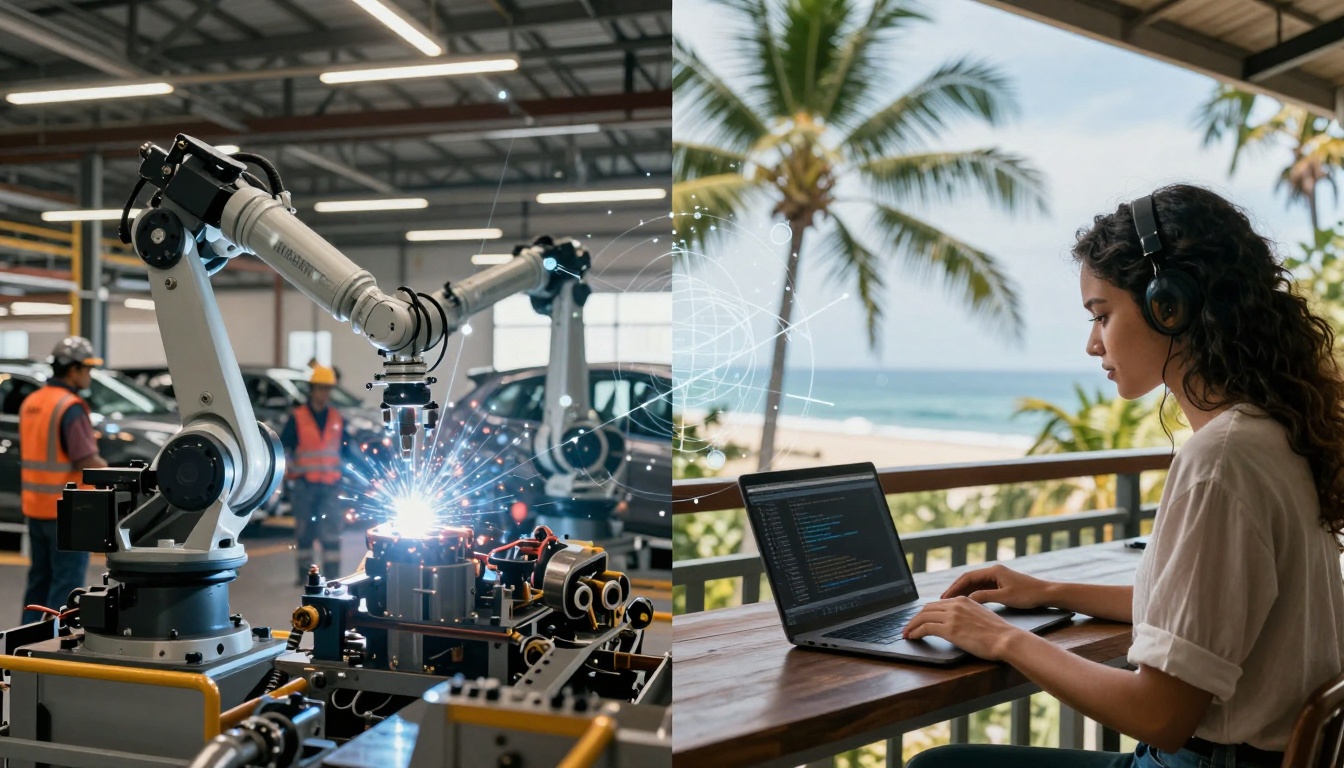
Picture a factory floor in Manchester. A worker stands by as a robot arm welds car parts with perfect speed. No breaks, no errors. Miles away, a developer in Bali codes software from her laptop, miles from the office. These scenes show the blend of AI, robots, and remote work. They alter jobs everywhere.
Goldman Sachs warns AI could affect 300 million full-time jobs worldwide. Yet it might create up to 170 million new ones by 2030. That’s a net gain if people adapt. Recent data from January 2026 backs this. US unemployment sits at 4.4%, with no mass losses yet. AI caused 55,000 layoffs in 2025, a small slice of total cuts.
This post breaks it down. We’ll look at jobs under threat from AI and robots. Then remote work’s role in opening talent pools. Next, fresh roles that emerge. Finally, skills to master for success. Change brings risks, but also chances. Workers who team with tech often win big.
Jobs AI and Robots Are Taking Over Right Now
AI and robots target routine work first. A PwC report says 30% of jobs could automate by the mid-2030s. Globally, 14% of workers may need new occupations by 2030. In the US, AI might displace 10.4 million jobs or 6% by then. Two-thirds of roles face partial changes. Humans shift to tougher tasks.
Manufacturing loses fast. Robots handle repeats like assembly. Data entry clerks type less as software scans forms. Customer support chats go to bots. Even some managers face agentic AI that plans alone.
Which job surprises you? Entry-level office work? Programmers see shifts too. Nearly 40% of jobs face AI tweaks. Firms test tools now. No huge productivity boom yet. But displacement builds.
Manufacturing and Routine Tasks Hit Hardest
Factories deploy robots at pace. Up to 2 million manufacturing jobs vanish by 2026. AI spots defects, packs goods. Humans once did these boring loops.
Take car plants. Robots weld, paint, assemble. A 25% drop in such tasks hits US and Europe. Workers move to oversight or fixes. Robots tireless, but humans fix surprises.
Firms gain. Output rises without fatigue. Staff focus on complex steps like design tweaks.

Photo by igovar igovar
White-Collar Entry Roles Under Threat
Office juniors feel the pinch. Data entry? Gone to scanners. Clerks file digitally. Customer support? Chatbots handle queries round the clock.
Agentic AI drafts reports, schedules. Half of entry white-collar roles risk cuts in five years. U.S. Bureau of Labor Statistics projections show shifts in admin and analysis.
Two-thirds of jobs partly automate. Coders debug less as AI writes code. Grads compete with tools. Adapt or seek oversight gigs.
Remote Work Opens Doors to Global Talent
Remote work explodes with AI. Location fades. Firms hire from anywhere. A London bank taps coders in Lisbon. Tools like Zoom and Slack make it smooth.
Productivity climbs. Some firms see 7% yearly gains. But offices shrink. Entry hires drop as AI screens CVs. Sectors shift. Legal and finance go digital fast. Healthcare clings to in-person.
Imagine a solicitor in Leeds reviews cases from Cornwall. AI summarises docs. She focuses on advice. Global talent pools grow. Firms cut costs, boost skills.
CEOs rethink space. Hybrid models stick. Remote pairs with AI for flexible shifts.
Flexibility Meets AI Tools for Better Work-Life
Remote lets skills travel. Learn AI on the go. A marketer in Scotland uses tools to analyse trends from home.
Human-AI pairs shine. Tools draft, humans judge. Work-life balances. Parents log in post-school run. Burnout dips.
Insights on generative AI and future work note portable skills rule. Daily tweaks keep you ahead.
Fresh Opportunities AI and Robots Create
Losses grab headlines. Gains matter more. Net 170 million new jobs by 2030. Against 92 million displaced. AI needs overseers, maintainers.
Healthcare booms. Nurses use robots for lifts. Finance gets AI fraud spotters. New fields: robot repair, data validators. 20-50 million jobs in care, build, tech upkeep.
Humans excel at judgement, empathy. AI crunches numbers. You connect dots. Creative fixes stay human.
Demand for AI skills soars sevenfold in two years. Shortages fill fast.
Roles in Human-AI Teamwork
Check AI outputs. Spot errors in code or scans. Solve edge cases bots miss.
Prompt engineers guide tools. Trainers label data. Continuous tweaks matter. Firms hire for these loops.
Skills You Need to Thrive in This New Job World
12-14% of workers switch jobs by 2030. 40% upskill. Reskilling closes gaps. Governments fund courses. Firms train in-house.
Master AI basics. Use chatbots daily. Pair with remote habits. Judgement trumps raw speed.
Men face slightly more hits. Healthcare, education grow. Vocational trades rise too. Adapt daily. Jobs expand for those who learn.
Optimism rules. Markets stay strong. Team with tech.
Upskilling Trends and Predictions
Job exposure hits 30%. Reskilling for Industry 4.0 stresses training. Healthcare adds roles. Education too.
Leaders push vocational paths. AI skips some manual work. Skilled hands win.
Conclusion
AI, robots, and remote work displace routines but spark net gains. 170 million new jobs outweigh losses. Manufacturing and entry offices shift. Remote opens worlds. Humans thrive in teamwork, oversight.
Learn AI tools now. Embrace remote flexibility. Check CurratedBrief feeds for updates. What skill will you build first?
The future looks busy for adapters. Picture teams where people and machines boost each other. Share your views below. Stay ahead.