



Listen to this post: What Actually Happens When You Use Free Café Wi-Fi
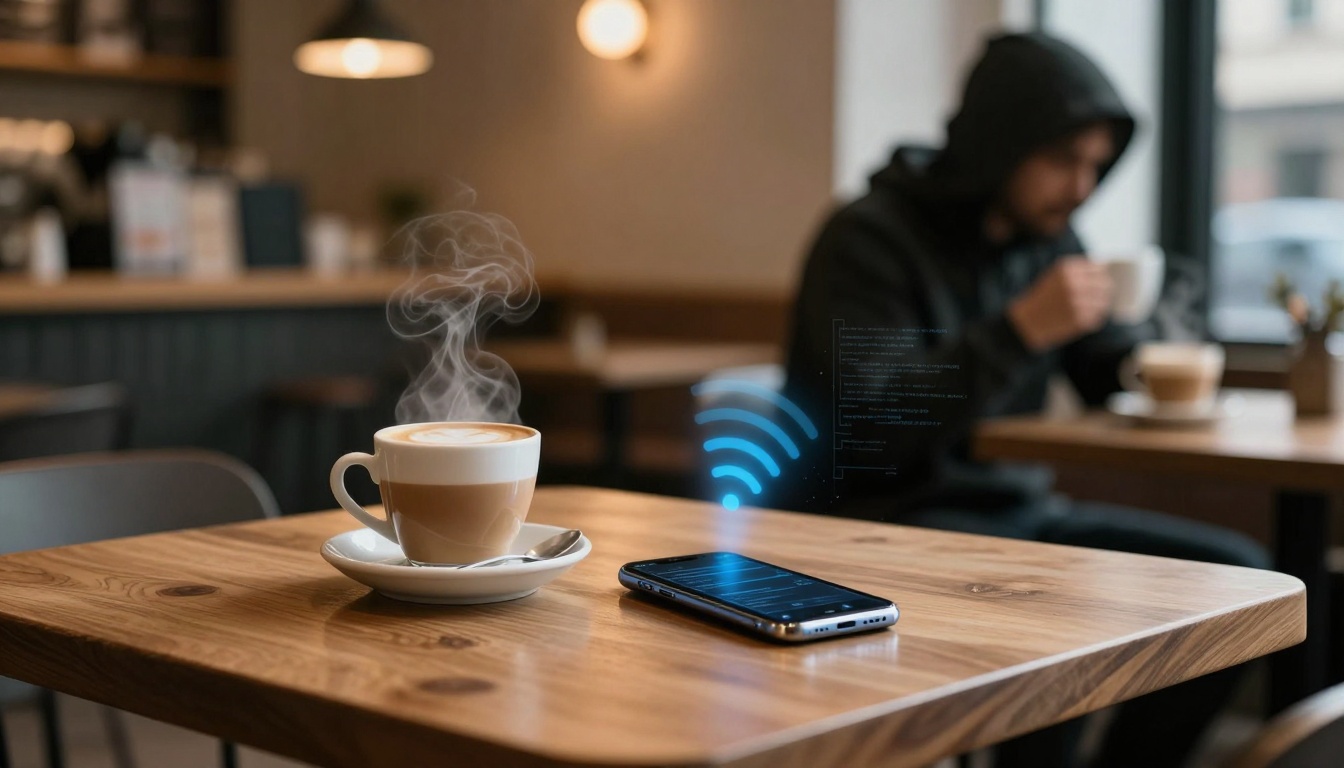
Picture this: it’s a chilly January morning in 2026. You duck into a bustling café in central London. Steam rises from your fresh latte. You settle at a corner table, pull out your phone, and spot “CafeFreeWiFi”. One tap, and you’re online. Feels seamless. But across the room, a hacker sips their flat white. They watch your every move.
Free café Wi-Fi looks harmless. It shares your data with total strangers though. Opens doors to swift attacks. Leads straight to theft of passwords, bank details, even your identity. Recent trends show 4 in 10 users face incidents after connecting in such spots. Hackers grab info in seconds. They sell it on the dark web for quick cash.
This piece breaks it down. How data flows into the wrong hands. Top attacks like man-in-the-middle and evil twins. Fresh 2026 stats that hit hard. Plus simple ways to shield yourself next time. No more blind trust in that free signal.
Photo by Stefan Coders
How Your Data Ends Up in the Wrong Hands
Café networks run unencrypted most times. Your info travels in plain sight. Anyone with basic tools can spot it. Think of the Wi-Fi as a crowded pub. Everyone overhears your chat. Hackers use that to their gain.
Devices broadcast packets constantly. These carry emails, passwords, card numbers. On open networks, they float free. No lock in place. A person next to you runs software. It pulls your details mid-air. Logging into your bank app over coffee? That transaction shows up clear.
Shared setups make it worse. Multiple users on one pipe. Your traffic mixes with theirs. Tools scan the lot. Recent dark web sales prove it. Stolen café data fetches pounds per record. One breach, and your life’s online for bids.
Packet Sniffing Steals Your Info in Seconds
Packet sniffers act like fishing nets in a stream. Your data swims by as bait. They catch logins, chat messages, bank pins. Café Wi-Fi skips HTTPS checks often. So all see the haul plain.
Tools like Wireshark run free. A hacker fires it up on their laptop. In seconds, your Gmail password pops. Or that Amazon buy with full card info. Trends link this to identity theft spikes. One stolen detail sparks account takeovers. Fake loans in your name follow.
Picture sipping tea. You check emails. Packets zip out unscrambled. Neighbour’s screen lights with your secrets. Simple fix? Encryption. But cafés rarely offer it. Your move matters.
Open Sharing Turns Your Device into a Target
File shares like AirDrop stay on by default. Attackers spot your device. They beam over malware files. Looks like a menu photo. You tap. Infection starts.
Bluetooth pairs easy too. Open mode invites direct probes. Hackers pair, pull contacts or photos. Auto-connect worsens it. Phone joins fake nets without ask. Hands traffic to foes.
Real scene: busy Manchester café. You enable AirDrop for a mate’s pic. Stranger sends virus disguised as lost wallet find. Connects via Bluetooth. By next sip, they roam your files. Common now with crowds.
Sneaky Attacks Hackers Pull Off in Cafés
Hackers love cafés. Crowds hide them. Free power sockets too. They set traps at the next table. You connect. They pounce. Common hits top the list this year.
Man-in-the-middle ranks high. They slip between you and the site. Read or tweak data. Evil twins fake legit nets. Lure your join. Malware slips via pop-ups or shares. All exploit weak signals.
Public Wi-Fi security risks for businesses detail these threats. They note MitM and evil twins lead packs. Hackers monitor dozens at once. Your coffee break turns data grab.
Man-in-the-Middle: The Invisible Spy
MitM starts subtle. Hacker mimics the router. Your phone links to them, not the real one. Traffic routes through their gear first.
Step one: you load banking site. Request goes to hacker. They fetch real page. Send it back altered maybe. Or just log your password. Café buy example. You pay for scone. Hacker swaps card details. Charge hits their account.
No warning shows. Padlock icon lies. They alter transfers too. Send fake confirmations. One study calls it top café threat.
Evil Twins Lure You into Traps
Evil twins copy real names. “CostaFreeWiFi” spawns “Costa-Free-WiFi-2”. Stronger signal pulls you. You switch. All eyes on your flow.
Hackers park nearby with boosters. Scan for joins. Once in, they log sites, steals creds. Stats show surge in coffee shops. Remote workers prime marks.
You hunt signal bars. Pick the full one. It’s theirs. Minutes later, emails flood dark markets. Simple rename fools most.
Malware Creeps in Unnoticed
Pop-ups hit first on fake nets. “Update Flash?” You click. Virus downloads. Steals keystrokes, files. Or ransomware locks screen. Pay or lose data.
Shares spread it fast. Bad PDF via AirDrop. Opens trojan. Phones hit too. Apps grab SMS codes for bank hacks.
Café victim: check news site. Pop-up urges scan. Malware roots. Sells your info later. Locks photos for bitcoin. Quiet creep, big pain.
Why 2026 Café Wi-Fi Risks Hit Hard
Risks boil over this year. Nearly 4 in 10 users report breaches post-public Wi-Fi. Cafés top spots. Up from last year with remote work boom.
Forbes flags MitM as leader. Evil twins climb fast. UK cybersecurity statistics for 2026 back it. Public nets fuel half incidents. Women dodge more, but all at risk.
Cafés skimp on router security. Old firmware invites probes. No guest isolation. One leak hits all. Dark web thrives on Wi-Fi creds. First-half 2025 saw 8,000 breaches global. 345 million records gone. 2026 trends worse.
Remote setups worsen it. Folks bank, email from tables. 43% check personal mail. 20% buy online. 18% hit banks. Few spot fakes. One in five confident max.
VPN skips common. Cost or hassle cited. Device shields fail alone. Breaches cost identities, cash. Urgency builds. Think before tap.
People chase speed over safety. Hybrid jobs pack cafés. Hackers follow. Stats shock: men hit harder. Caution gaps wide. Secure routers rare. Data sales boom. Your next latte? High stakes.
In that 2026 café, your tap sparked unseen chains. Data snatched, attacks launched, stats prove pain. 4 in 10 pay the price.
Pause next time. Grab a VPN first. Skip bank logins, sensitive buys. Keep software fresh. Turn off AirDrop, Bluetooth.
Stay safe out there. Share this if it clicked. Check CurratedBrief for more tech safety news. You’ve got the power now. Sip easy.