
Listen to this post: SEO vs PPC: where a small business should invest first (January 2026)
You’ve got a limited pot of money, limited time, and a hundred other jobs to do. Then someone tells you to “do SEO” and “run PPC”. Both can work, but they don’t work in the same way.
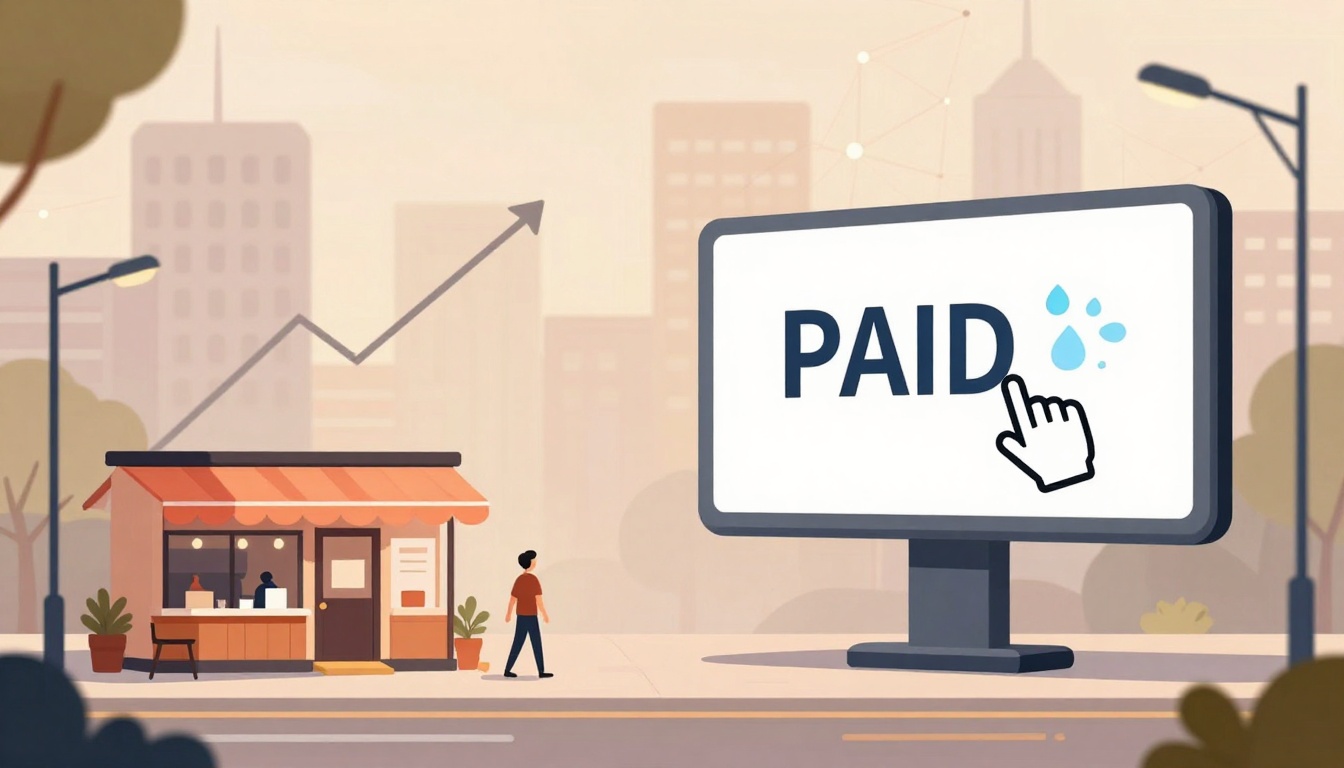
Think of SEO as earning attention over time, like building a reputation on your high street. PPC is paying for a billboard today, great for instant footfall, but it stops the moment you stop paying.
This guide gives you a clear way to choose where to put your first pounds, based on your goals, timeline, and margins. In January 2026, search results are busy, competition is high, and tracking matters more than ever. Many small businesses end up using both, but your first step should match your situation.
SEO vs PPC explained in plain English (what you get, what you pay)
SEO (search engine optimisation) is the work you do to help your site show up in the non-paid results on Google. These listings are often called “organic results”. You don’t pay Google for each click, but you do pay in time and effort, either yours or someone else’s.
PPC (pay-per-click) is paid advertising on search engines, most commonly Google Ads. Your ad appears in the sponsored placements, and you pay when someone clicks. Google’s own overview is a good plain-English reference if you want the official definitions of both channels: Small Business Advertising Strategies – Google Ads.
What you actually do day to day
SEO is less mysterious when you list the tasks:
- Improving pages so they load fast on mobile and are easy to use.
- Creating service pages that match what you sell (and where you sell it).
- Writing helpful content that answers real customer questions.
- Setting up and improving your Google Business Profile (especially for local services).
- Getting reviews and making sure your business details are consistent online.
PPC has its own “hands-on” list:
- Picking keywords (what you want to show up for).
- Setting budgets and bids (how much you’re willing to pay for a click).
- Writing ads (headlines, descriptions, offers).
- Building landing pages (the page people land on after the click).
- Tracking calls, forms, and sales so you can see what paid clicks produce.
The core trade-off is simple: SEO takes time but can keep paying off, PPC is fast but stops when spend stops. A broader comparison from a search marketing perspective is also covered here: SEO Vs. PPC: What’s The Best Strategy For Your Business?.
How fast each one works, and what that means for cash flow
Speed isn’t a vanity metric when you’ve got rent, wages, stock, and supplier bills.
In most small business cases:
| Channel | When you might see meaningful results | What happens when you stop |
|---|---|---|
| SEO | Often 3 to 6 months (sometimes longer in tough niches) | Rankings can hold for a while if you keep the site healthy |
| PPC | Same day to same week, once ads are approved | Leads usually stop quickly |
That’s why PPC is tempting when you’re under pressure. You can switch it on and see enquiries within days.
The risk is also obvious. If you rush SEO, you might publish weak pages that don’t rank. If you run PPC without tracking, you can burn through money and still not know what worked.
A practical guardrail for both: if you can’t measure leads, you can’t manage spend.
What results look like: leads, sales, phone calls, and brand trust
Both channels can produce clicks. Clicks are not the goal. The goal is qualified enquiries and sales.
PPC is usually easier to measure tightly because you can track:
- Calls from ads (with call assets or call tracking)
- Form fills
- Online purchases
- Booking actions
SEO results are also measurable, but they tend to show up as a mix of:
- Calls from people who found you in organic listings
- Contact forms after reading a service page
- Repeat visits as people compare options
- Brand searches later (people search your business name)
There’s also trust. Many people still trust organic listings more than ads, because organic results feel “earned”. At the same time, plenty of searchers click ads when the offer is clear and the page looks credible.
Recent industry round-ups also keep pointing to the same behaviour: a large share of clicks still goes to organic results. If you want a starting point for those kinds of stats, see: 120+ SEO vs. PPC Statistics: 2025 Face-Off. Treat any single number with caution, but the direction is consistent, organic visibility matters for most categories.
Where to invest first: a quick decision guide for small businesses
If you want a clean way to decide, focus on your first 30 to 90 days.
Start with two questions:
- Do you need leads this month to keep the business steady?
- If leads come in, do you make enough margin to pay for them?
Here’s the simplest “if this, then that” logic:
- If you need enquiries quickly, start with PPC, but keep it tight and track it properly.
- If you can wait a few months and want lower costs later, start with SEO basics and build from there.
- If you can afford a modest spend and you’re serious about growth, do both in a phased way (PPC for speed, SEO for staying power).
Start with PPC if you need leads now (new business, new offer, seasonal rush)
PPC makes sense when time is the main constraint.
Common scenarios:
- You’re opening soon and need bookings on the calendar.
- You’ve launched a new service and need proof people will buy it.
- You’re seasonal (for example, gardeners in spring, accountants in January).
- You’re in urgent local services (locksmiths, emergency plumbing).
- You need to fill gaps fast, like cancellations in a clinic.
The upside is immediate visibility and fast learning. You can test what people respond to, without waiting months for rankings.
Basic guardrails that protect your budget:
Start small: Set a daily cap you can live with for 2 to 4 weeks.
Target high-intent searches: “Boiler repair Manchester” beats “boilers”.
Use location targeting: Don’t pay for clicks from outside your service area.
Build one focused landing page per offer: Don’t send everything to the homepage.
Track calls and forms: If you can’t see leads, pause until you can.
For a PPC set-up that stays practical (rather than theory-heavy), this is a useful checklist-style reference: PPC Best Practices for Small & Medium-sized Businesses.
Start with SEO if you can wait, and you want lower costs over time
SEO is the better first move when you can be patient and you want an asset you keep.
Common scenarios:
- You’re a steady local service business (decorator, builder, dentist, solicitor).
- Your ad budget is limited and you can’t keep paying for every click.
- Your customers take time to decide, and research matters.
- Trust is a big part of the sale (health, legal, high-value home services).
- You’ve already got some word of mouth, you just need Google to back it up.
The payoff is compounding visibility. A good service page can bring leads for years, with updates and upkeep.
A simple starting SEO checklist (week 1 to week 4):
Fix anything that blocks Google: broken pages, messy navigation, slow mobile load.
Create pages for what you sell: one strong page per main service, with clear pricing signals where possible.
Add location context: the areas you serve, without stuffing lists of towns everywhere.
Improve titles and headings: make them match real searches and real services.
Build reviews: ask after a successful job, make it easy, reply to reviews.
Publish a few helpful answers: focus on questions customers ask before they call.
If you want a straightforward overview of when SEO wins and when PPC wins, this comparison is current and easy to scan: SEO vs PPC: Which Strategy Is Best for Your Business?.
How to split a small budget: a simple plan that uses both without wasting money
The either-or debate is a trap. SEO and PPC often work better together because they cover each other’s weak points.
In 2026, search pages are crowded. You might see ads, map results, organic listings, and shopping placements all fighting for attention. Owning more than one spot (an ad plus an organic listing) can help, but only if the message matches and the landing page does its job.
Keep your plan simple. You’re aiming for three outcomes:
- More qualified leads
- A steady cost per lead you can afford
- A repeatable way to learn what customers respond to
Use PPC to test what people actually search, then turn winners into SEO pages
Guessing keywords is a slow way to grow. PPC is a fast way to test demand.
A practical loop looks like this:
- Run small PPC campaigns on a shortlist of high-intent searches.
- Track which searches produce calls, forms, and sales.
- Keep a shortlist of “winners” (queries, headlines, and offers that convert).
- Build SEO pages around those winners, one strong page per service or topic.
This reduces guesswork and saves months of writing content nobody wants. It also stops you chasing broad terms that look nice in a report but don’t bring buyers.
Make SEO improve PPC performance (better landing pages, higher trust, lower costs)
Good SEO work often improves paid results, even if you never change your bids.
Why? Because the same things that help organic visitors also help paid visitors:
- Pages load faster, so fewer people bounce.
- The offer is clearer, so more people enquire.
- The content matches the search, so visitors feel they’re in the right place.
In plain terms, if your page answers the question fast, you usually get more leads from the same spend. That can lower your cost per lead, even when clicks are pricey.
Quick wins that help both channels:
Fast mobile pages: most local searches happen on phones.
Clear call to action: phone number, form, or booking button that stands out.
Real-world proof: reviews, photos of work, accreditations, case studies.
Price signals: “from” ranges or minimum call-out fees can filter time-wasters.
A starter budget split you can adjust (and the signs to shift spend)
Instead of fixating on exact amounts, pick a split that fits your goal this quarter.
Here are three simple starting points:
- Mostly PPC (70/30): best when you need leads now, or you’re testing a new offer.
- Balanced (50/50): best when you need some leads now, but want to build a long-term channel.
- Mostly SEO (70/30): best when cash is tight month to month, and you can wait for growth.
Then review monthly, not daily. Daily tweaks often turn into panic edits.
Signs it’s time to shift budget:
- PPC cost per lead is too high and doesn’t improve after tightening targeting.
- SEO pages start ranking for buyer terms and convert into enquiries.
- The season is ending, so you reduce PPC and keep SEO ticking.
- You launch a new service, so you add PPC to speed up learning.
If you want a deeper view on mixing spend without spreading yourself thin, this is a solid reference: How To Get The Perfect Budget Mix For SEO And PPC.
Common mistakes that waste money in SEO and PPC (and how to avoid them)
Small budgets can work, but only if you avoid the usual traps.
The big ones are the same in both channels:
- Chasing vanity metrics (traffic, impressions, clicks) instead of leads and sales.
- Spreading effort too thin across too many services or locations.
- Weak offers (no clear pricing, no reason to choose you, no trust signals).
- Poor tracking, so you can’t see which spend produced which leads.
SEO mistakes: writing blog posts with no local or buyer intent, and ignoring basics
Blogging can help, but random posts don’t pay the bills.
Common SEO mistakes include:
- Targeting broad keywords that don’t match your services.
- Not having proper service pages, so Google and customers can’t find what you do.
- Thin content that repeats the same lines as every competitor.
- Slow site speed, especially on mobile.
- Ignoring Google Business Profile and reviews, even though local intent is strong.
The fix is simple and often boring, which is why it works:
Start with pages that match what customers buy (your core services). Build clear location relevance. Then add helpful content that supports those pages, like FAQs, buying guides, and “what to expect” posts.
PPC mistakes: sending paid clicks to the wrong page, and not tracking conversions
PPC waste usually comes from one of two problems: poor targeting, or poor pages.
Common PPC mistakes include:
- Sending ad traffic to the homepage instead of a focused landing page.
- Using broad keywords that attract research clicks, not buyers.
- Forgetting negative keywords, so you pay for irrelevant searches.
- Not tracking calls and forms, so you judge ads by clicks.
- Making too many changes at once, so you don’t learn what caused what.
The fix is a clean set-up:
One clear landing page per offer, tight keyword themes, proper negatives, and conversion tracking that you trust. Then pause what doesn’t convert and put spend behind what does.
Conclusion
If you need leads quickly, PPC is usually the fastest way to get moving and learn what converts. If you want lower costs and steadier growth over time, SEO is the better long-term bet. For most small businesses, the strongest approach is phased: use PPC to bring in early leads and data, then build SEO assets that reduce your reliance on ads.
Pick one goal for this month, leads now or lower costs later. Choose one channel to start this week, set up tracking before you spend, then review results after 30 days to decide what to add next.