


Listen to this post: The Geopolitics Map in Plain Words: Russia-NATO’s New Flashpoint (January 2026)
If the world feels louder than usual, it’s because several pressure points are being squeezed at once. This is a calm, plain-language map in words for January 2026, written to help you see what’s happening without feeding the panic.
A flashpoint is a place where small events can turn into bigger conflict. It’s like a dry hedgerow in summer, a single spark might fizzle out, or it might catch and spread.
Right now, the newest flashpoint is rising Russia-NATO friction in Europe, running alongside the ongoing war in Ukraine. This explainer covers who’s involved, what’s happening, why it matters, what could go wrong, and the practical signs to watch.
The world map in plain words, where the heat is building right now
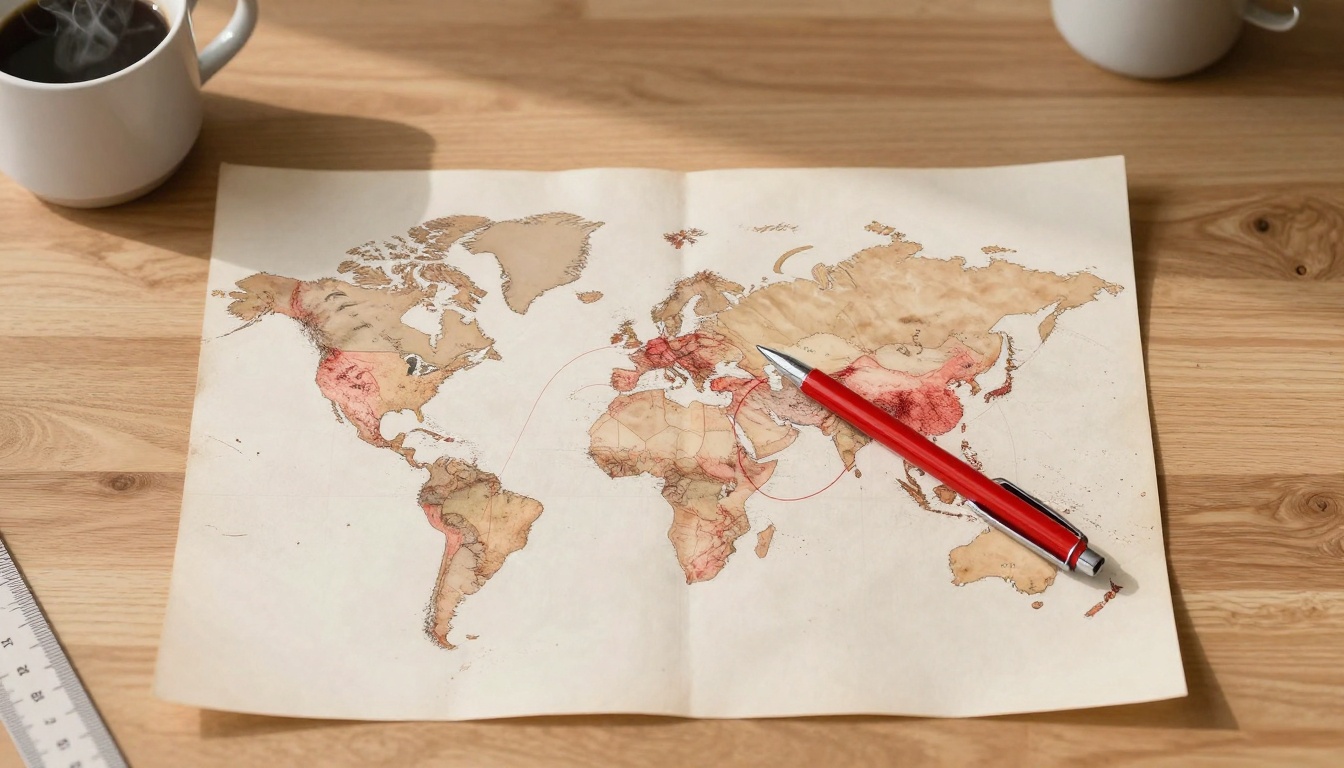
Picture a paper map on a kitchen table. No secret codes, no long history lesson, just the parts where the pen keeps circling.
Europe is the main circle. The war in Ukraine continues, but the sharper risk is what happens around it: NATO borders, nearby seas, the air above them, and the cables and servers that hold modern life together. When armed forces work close to each other, the margin for error shrinks.
Across the Indo-Pacific, the circle sits around Taiwan and the shipping lanes nearby. That patch of ocean carries trade, energy, and the parts that make electronics work. A long disruption there wouldn’t stay “over there” for long, it would land in factories, prices, and supply chains.
In the Middle East, the circle spans Gaza, the West Bank, Israel, and Iran’s wider network of partners and rivals. This region can shift oil prices quickly. It can also pull in outside powers through bases, shipping routes, and alliances.
These circles connect. Energy and trade run between them like roads. When one road closes, the traffic spills into the next.
Europe, the Ukraine war spills into a wider Russia-NATO standoff
Ukraine is still the central battlefield, but the broader danger is the contact zone around it. Border states and nearby waters see more patrols, more tracking, more alerts.
There’s also a steady push-and-pull in the “space between peace and war”, a phrase echoed in public warnings like the BBC’s report on a new MI6 chief describing grey-zone pressure (https://www.bbc.co.uk/news/articles/cgqzed1vjw5o).
Indo-Pacific and the Middle East, Taiwan pressure and Israel-Iran risks stay high
In the Indo-Pacific, China-Taiwan tension stays high, with the US and Japan close by. The risk isn’t only a battle. It’s also coercion: drills, blockades, and threats that rattle shipping and chip supply.
In the Middle East, the danger comes in layers: street-level violence, rockets and raids, and a shadow conflict that could snap into direct strikes. If that happens near major energy routes, markets react first and ask questions later.
For a wider list of global hot zones, International Crisis Group’s “Conflicts to Watch in 2026” gives useful context (https://www.crisisgroup.org/global/10-conflicts-watch-2026).
The newest flashpoint, Russia and NATO edging closer to a direct clash
This flashpoint isn’t a single front line. It’s a set of fraying edges where armed forces and intelligence services operate close together, and where “unknown” events are sometimes meant to stay unknown.
Think of everyday examples:
- A military aircraft flies too close, a pilot misreads a move, and a routine intercept turns sharp.
- A drone crosses a border by mistake (or “mistake”), air defences respond, and politics takes over.
- A cyberattack hits a power grid or airport systems, and nobody can prove who did it quickly.
Most leaders say they want to avoid a full war. That matters. But accidents and misread signals don’t need permission.
Recent reporting has shown how drone incidents can become tests of resolve, including the BBC’s coverage of Russian drone incursions linked to NATO’s eastern flank (https://www.bbc.co.uk/news/articles/clydk8821nro).
What “hybrid conflict” means, the grey-zone moves below open war
Hybrid conflict is simple in concept: it’s pressure without open war.
It can include cyberattacks, sabotage, disinformation, border pressure, GPS jamming, or mysterious damage to infrastructure. The point is to create costs and fear while keeping things muddy enough to deny.
These tactics get used because they often:
- cost less than open fighting,
- avoid clear red lines,
- let politicians say “it wasn’t us”.
The problem is the human one. Trust drops, tempers rise, and every small incident gets read as part of a pattern.
Why it is getting hotter now, war fatigue, re-arming, and a fight over resolve
The war in Ukraine has dragged on. That creates war fatigue in some countries, and a hard edge in others.
Russia wants to weaken support for Ukraine and show that backing Kyiv brings pain at home. NATO states want to protect members, keep aid moving, and avoid looking easy to push around.
At the same time, Europe is re-arming. More kit, more patrols, more exercises, more chances for signals to be misread. Domestic politics also matters, leadership changes, elections, and public pressure can change decisions fast, sometimes in days.
How a small incident can turn into a big crisis, the risk ladder in simple steps
Escalation often looks less like a Hollywood switch, and more like a staircase in poor light.
- A small trigger: a drone is shot down, a ship collides, an undersea cable is damaged.
- A rushed response: leaders must speak before all facts are in, and they choose strong language to look firm.
- A tit-for-tat: extra patrols, sanctions, arrests, cyber strikes, or a limited military action.
- A misread move: one side treats defence as attack, and raises readiness.
- A locked-in moment: backing down looks humiliating, so both sides hold their line.
The off-ramps matter, and they’re often unglamorous: military hotlines, public clarifications, joint fact-finding, quiet back-channel talks. The best crisis is the one that ends with a dull press statement.
The three big dangers, accidents, cyber shocks, and the nuclear shadow
Accidents are the most ordinary danger. A downed drone, a missile that lands off course, a collision in crowded water, a pilot’s split-second choice. None of it has to be planned to be deadly.
Cyber shocks can hit civilians fast. Power, banking, airports, trains, hospitals, and undersea cables are tempting targets because they create pressure at home. When ordinary life gets disrupted, leaders feel pushed to respond.
The nuclear shadow makes every direct Russia-NATO clash heavier. Nuclear weapons don’t need to be used to shape choices. Their existence raises the cost of miscalculation, and it can compress decision time during a crisis.
To keep track of the war’s temperature, it helps to read multiple sources. For example, this January 2026 report on missile use near the EU and NATO border gives a sense of how rhetoric and risk can spike quickly (https://www.aljazeera.com/news/2026/1/9/ukraine-calls-on-allies-to-raise-pressure-as-russia-fires-oreshnik-missile).
What it could mean for everyday life, prices, energy, travel, and politics
Even if fighting stays contained, the side-effects travel.
Energy and fuel prices can jump on fear alone, especially in winter. Markets can swing on headlines and then swing back, like a door in a strong gust.
Travel can get messy near borders and in the air. Jamming and drone scares can disrupt airports. Cyber incidents can slow down services that people assume will always work.
Politics can harden too. Defence spending debates get sharper, and migration arguments become louder. In the UK, these issues often show up as cost-of-living anxiety, questions about national security, and pressure on public budgets.
Signals to watch in the next 30 to 90 days, without doomscrolling
You don’t need to refresh your feed every hour. Watch patterns, not rumours.
A simple checklist:
- Official statements from NATO, national governments, and defence ministries.
- Evidence-based reporting with images, locations, and confirmation, not anonymous claims alone.
- Operational changes: new deployments, new air patrols, new rules of engagement.
- Repeat incidents: one event can be chance, three similar events can be a message.
If a claim sounds made to inflame, wait. The first story is often incomplete.
Clues the standoff is easing, clear rules, calm language, and working hotlines
Easing often looks boring. That’s a good sign.
Look for renewed military-to-military contacts, agreed incident rules at sea and in the air, fewer close calls, and leaders choosing careful language. When governments publish clear timelines and avoid threats, it usually means private channels are doing their job.
Clues it is worsening, more close calls, bigger exercises, and civilian-facing cyber hits
Worsening looks like friction turning into routine.
Watch for more reported sabotage, major cyber incidents that hit public services, larger drills near borders, and public threats that remove room to back down. Treat early claims with care until they’re confirmed, but don’t ignore repeated patterns.
For another structured view of risk levels, the Council on Foreign Relations annual survey is a useful reference point (https://www.cfr.org/report/conflicts-watch-2026).
Conclusion
The world has several hot zones, but the newest flashpoint is the rising Russia-NATO friction around Europe, sitting beside the grinding war in Ukraine. The main risks are plain: accidents, cyber shocks, and escalation under a nuclear shadow. Most crises don’t begin with a grand plan, they grow from small events that land badly. The practical move is to watch the signals, protect your attention, and stick to verified facts over fear, because clarity is its own kind of safety.