
Listen to this post: How to Build a One-Person Online Business Around Your Skills (2026 Guide)
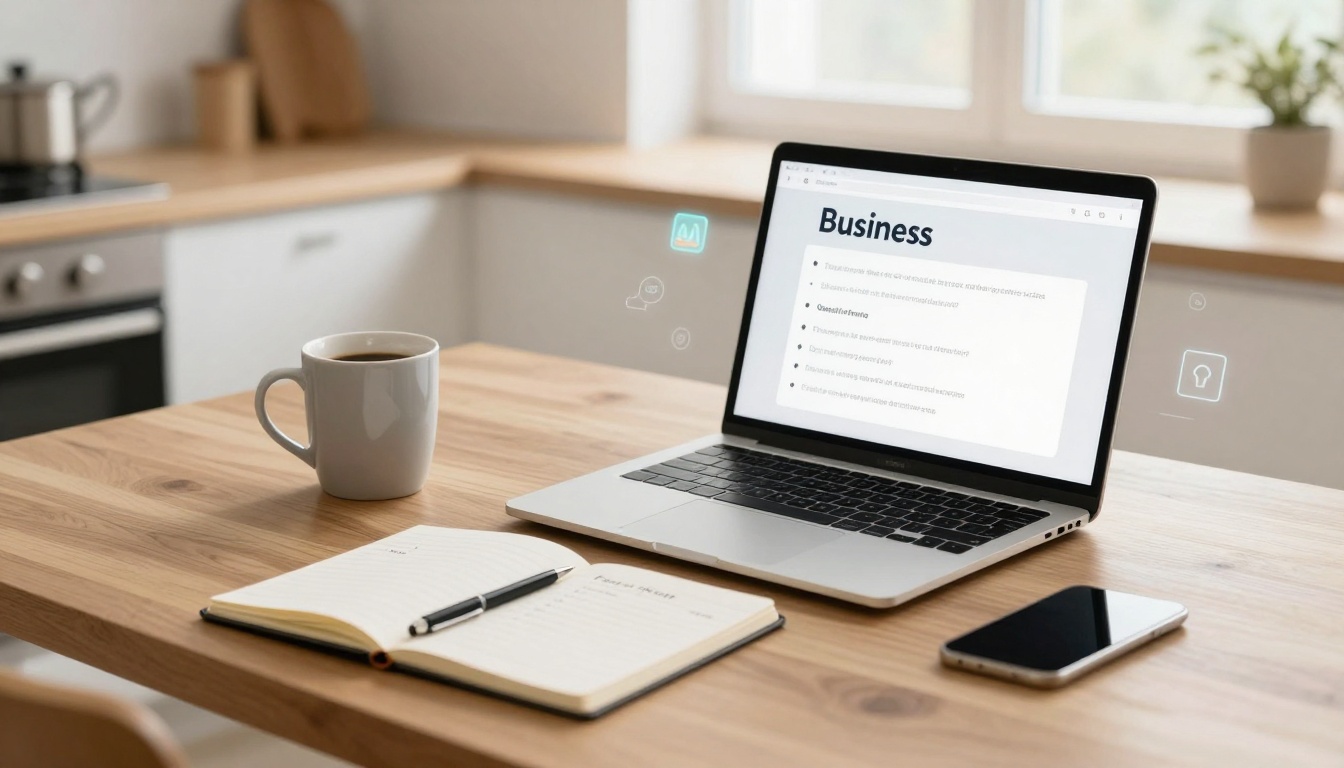
Picture a laptop on a kitchen table. A mug that’s gone cold. A skill you already use at work, or for friends, without thinking too hard. Now picture a small offer you could sell this week, not next year, not “once you’ve built a brand”.
That’s the heart of a one-person online business in 2026. You don’t need funding. You don’t need a massive audience. You don’t need a complex funnel with seven steps and nine emails. You need one skill, one clear problem, one simple way to get paid, and the discipline to test fast.
AI tools and no-code sites make solo businesses quicker to run than ever. But speed doesn’t replace focus. The winners are still the people who pick a narrow promise, show proof, and keep turning up.
Start with your skill, then turn it into one clear offer
Most people don’t fail because they lack talent. They fail because they describe their talent like a list of ingredients, not a meal. “Marketing support.” “Content help.” “Tech consulting.” It’s vague, and vagueness doesn’t sell.
A one-person business needs an offer people understand in 10 seconds. Think of it like a shop window. If a stranger can’t tell what you do and who it’s for, they walk past.
Pick a skill you can show, not just talk about
Start wide, then narrow down. Write a quick list of skills from three places:
- Work: tasks you’re trusted with, tools you use, results you’ve helped create.
- Hobbies: photography, gaming communities, fitness planning, making things, writing.
- Life experience: organising family finances, moving abroad, living with a condition, caring, teaching yourself a system that now feels easy.
Now filter for proof. A skill with proof beats a skill with passion.
Proof can be simple:
- A before-and-after screenshot (a redesigned landing page, an improved CV).
- A small portfolio (three examples is enough).
- A measurable result (time saved, leads gained, errors reduced).
- A repeatable method you can explain.
If you’re stuck, use these prompts:
- What do friends ask you for help with?
- What tasks feel “oddly easy” to you?
- What could you teach in 30 minutes without notes?
- What have you fixed more than once for different people?
The goal is not to find the “best” skill. It’s to find the one you can deliver confidently and improve with each project.
Choose a narrow audience and a painful problem (niche beats noise)
A niche isn’t a cage. It’s a signal. It tells the right people, “This is for you.”
Use a simple method: one audience, one problem, one outcome.
Here are a few concrete niche examples that work well for one-person online businesses:
- CV rewrites for new graduates applying for UK internships.
- Shopify product photos for handmade brands that sell on social.
- Meal plans for busy shift workers who need simple supermarket ingredients.
- Notion or Google Sheets set-ups for freelance creatives who hate admin.
- Short-form video editing for tradespeople who want more local enquiries.
In 2026, buyers trust what they can see. Clear niches make proof easy because your work starts to look consistent: similar clients, similar problems, similar wins. Social platforms also tend to reward clarity. When your posts repeat the same theme, the right people find you faster.
Now turn your niche into a one-sentence offer you can copy and paste.
One-sentence offer formula: “I help [specific person] who struggles with [painful problem] get [clear outcome] in [timeframe] without [common frustration].”
Examples:
- “I help new graduates who get no interview calls get a job-ready CV in 72 hours without generic templates.”
- “I help handmade brands get clean Shopify product photos in a week without hiring a studio.”
If writing this feels hard, that’s useful feedback. It means the offer still needs sharpening.
For extra perspective on how solo businesses are shifting in 2026, this essay gives a punchy view on focus, distribution, and the role of AI: building a one-person business in 2026.
Pick a one-person business model that fits your time, energy, and income goal
A business model is just your way of getting paid. The mistake is picking the model first, then forcing your skill to fit. Do it the other way round.
For the next 30 days, choose one primary model. You can add more later. Most solid solo businesses start with services for cash, then add a product for scale.
A quick way to choose:
- If you want money soon, start with services.
- If you want more freedom later, build products from what you learn in services.
Service first for quick cash: freelancing, consulting, coaching
Services are simple. You do work, you get paid, you learn what people really want.
Here’s the difference in plain language:
- Freelancing: you execute (design, writing, editing, bookkeeping, ads).
- Consulting: you diagnose and advise (audits, strategy, systems).
- Coaching: you help someone do it themselves (accountability, skills, mindset, practice).
Packaging matters because it reduces decisions for the buyer.
Three easy service packages:
- Project: fixed scope, fixed price, fixed deadline (best for beginners).
- Retainer: monthly support with clear deliverables (best for stability).
- Session packs: 3 or 5 calls with notes and homework (best for coaching/consulting).
Starter pricing guidance (without getting silly): pick a price that makes you take the work seriously, but doesn’t make you freeze when you quote it. Many people start with a “pilot price” for the first 2 to 3 clients, then raise rates once proof is in place.
Keep deliverables concrete. For example, if you offer “LinkedIn profile refresh”, specify what’s included:
- Profile headline and “About” rewrite
- Keyword pass for your target roles
- 10 post ideas tailored to your experience
- A 30-minute handover call
AI can help with drafts, research, and admin. Use it like a capable assistant, not a substitute for judgement. You still need to check claims, match tone, and make choices that fit the client.
If you’re in the UK and setting up as a sole trader or limited company, it helps to read a practical overview of the admin side (accounts, tax basics, and getting started): starting an online business in the UK. It’s also a good reminder that Making Tax Digital changes are part of the 2026 reality (including planned requirements tied to income thresholds), so keeping tidy records early saves stress later.
Scale later with products: templates, digital downloads, courses, memberships
Products sound glamorous because you “create once, sell many”. The truth is simpler: products scale best when they’re built from real service work.
Turn what you already repeat into something sellable:
- Your repeated steps become a template.
- Your repeated client questions become a mini-course.
- Your onboarding checklists become a download.
- Your monthly support becomes a membership with office hours.
Realistic examples:
- A CV writer sells a “UK grad CV template + examples” pack.
- A meal planner sells a “shift worker meal prep” recipe set with shopping lists.
- A spreadsheet nerd sells a budgeting sheet with a short setup video.
Where people sell in 2026 varies (own site, marketplaces, social shops), but the principle is the same: keep the product promise narrow and the outcome clear.
A simple rule: don’t build a big course first. Build a small tool people can use today. Then improve it based on questions and refunds, not guesses.
For a systems-style view of building and selling digital products as a solopreneur, this guide is a useful reference point: one-person business playbook.
Build your simple sales engine: proof, traffic, and a smooth path to buy
You don’t need a complicated set-up to start. Your “sales engine” can be basic, as long as it works.
Minimum setup:
- A one-page site (or a strong profile page) that states your offer.
- A payment link or invoice method.
- A clear way to contact you (email, form, DMs).
- A follow-up system (even a simple email list).
In 2026, marketing for one-person online businesses tends to work best when it’s answer-led. Short videos, helpful posts, and emails that solve a specific problem. Not motivational fluff.
Create proof fast: a tiny portfolio, testimonials, and case studies
Proof is the price of trust. Without it, people default to “maybe later”.
You can get proof without exaggerating or pretending you have clients you don’t.
Three honest ways:
- Sample projects: do 1 to 3 pieces that show your process and result.
- Discounted first clients: a pilot round with clear limits and a deadline.
- A “paid test” offer: a small, low-risk service (audit, review, 60-minute session).
Document what matters:
- Starting point (what was broken, messy, slow, unclear).
- Steps you took (brief and readable).
- Result (what changed, what improved).
- Evidence (screenshots, clips, a quote, a simple metric).
A one-page portfolio checklist:
- One sentence: who you help and what you deliver
- 2 to 3 examples with images or links
- A short paragraph on your method (three steps is plenty)
- 1 to 3 testimonials (even short ones)
- Your prices or “starting from” range
- A clear call to action (book, email, DM)
Keep it lean. Your first portfolio is not a museum, it’s a handshake.
Get consistent leads with one main channel and one backup channel
Choose one main channel for attention, and one backup you control.
Main channel options:
- SEO content: great if you like writing and want long-term leads.
- Short video (TikTok, Instagram, YouTube Shorts): great if you can show results quickly.
- YouTube: great for teaching and trust.
- LinkedIn: great for B2B services and professional proof.
Backup channel: email. Social posts disappear. Email stacks.
2026 trends favour social commerce and small audiences that buy. You don’t need millions of views. You need the right 50 people seeing the right message repeatedly.
A simple weekly plan that fits real life:
- 2 helpful posts that answer a common question in your niche
- 1 proof post (before and after, testimonial, mini-case study)
- 10 outreach notes (DMs or emails) to people who match your audience
- 1 email to your list (a tip, a story, and one call to action)
Outreach doesn’t need to be awkward. Keep it human:
- “I noticed you’re hiring for X. Want a quick checklist I use to fix Y?”
- “Loved your product shots. If you ever want a faster editing workflow, I can help.”
If you want a broader look at how solopreneurs are thinking about scaling with tools and systems going into 2026, this overview adds useful context: solopreneur scaling guide.
Conclusion
A one-person online business isn’t built by doing everything. It’s built by doing a few things well, then repeating them until they compound.
Start with a skill you can show. Turn it into a clear offer someone understands fast. Choose one model you can run for the next 30 days, services for cash first works for most people. Then build a simple sales engine, proof, one main channel, and email as your back-up.
Take one calm action today: write your one-sentence offer, message five people who fit your niche, or put up a one-page site with a payment link. You’re not behind, you’re just early. The goal is momentum, not perfection.