



Listen to this post: EU EES Border Queues and Flight Delays: The Chaos Explained
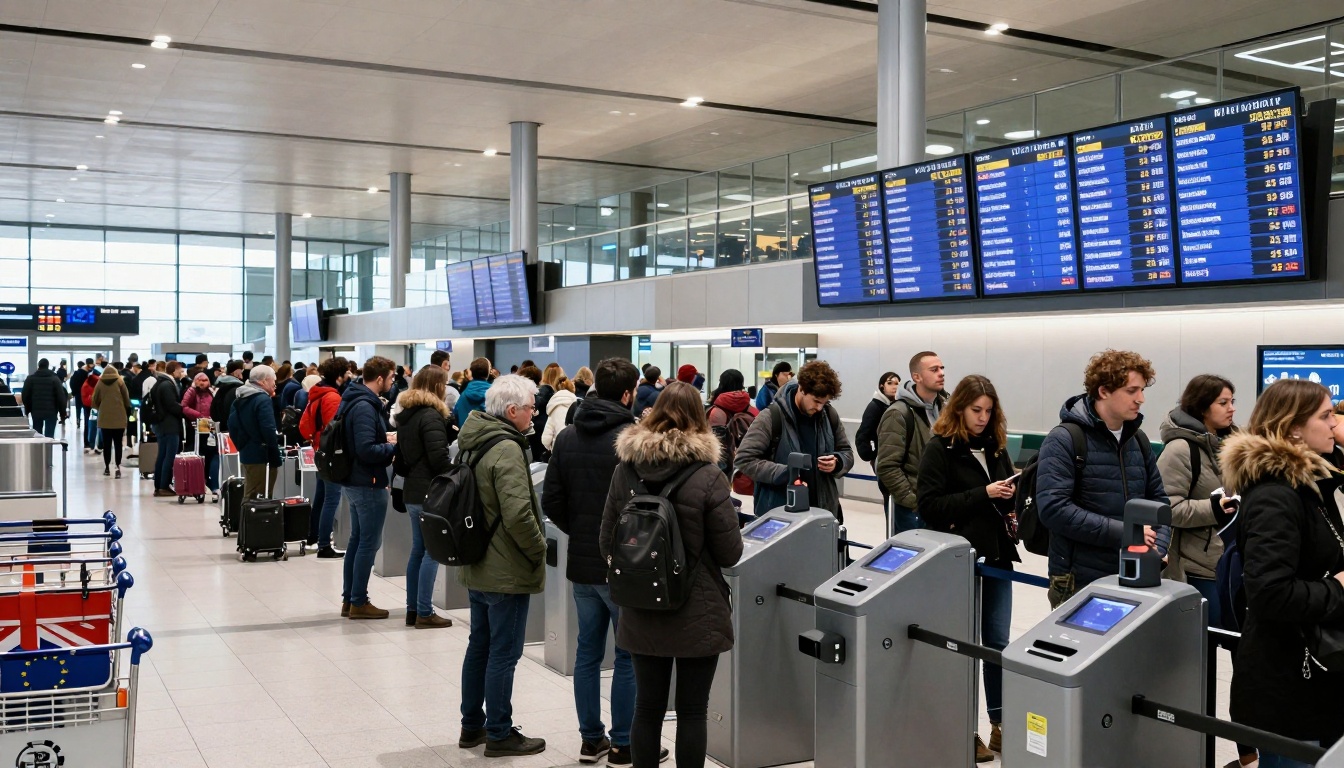
Picture this: you arrive at the airport three hours early, only to join a snaking line of frustrated travellers. Flight boards flash delays. Bags pile up. It’s January 2026, and EU Entry/Exit System (EES) rollout has turned passport control into a nightmare. This isn’t bad luck. It’s a new biometric check hitting non-EU visitors, including Brits, for the first time.
Launched in October 2025, EES expanded this month across more borders. It grabs face scans and fingerprints, ditching old stamps. UK travellers feel the pinch hardest post-Brexit. We’ll unpack the causes, spot the worst-hit spots, share fixes underway, and eye when queues might fade.

Photo by Kenneth Surillo
What Fuels the Border Queues and Flight Delays
The EU Entry/Exit System (EES) drives most hold-ups. It tracks non-EU stays up to 90 days in 180 via biometrics. Rolled out from 12 October 2025, it hit big expansion in early 2026. Airports now register first-timers at kiosks. Processing times jumped 70%, with peaks at three hours.
Software glitches snag data. Staff shortages slow lines. High-traffic mornings worsen it. Imagine hundreds of Brits funnelling through new machines at Paris or Amsterdam. What was a quick stamp now demands photos and four fingerprints. Backlogs spill to gates, delaying flights.
How the EES System Works in Practice
You land. Head to a kiosk. Scan your face and fingers. System links it to your passport. First time? Full registration. Future visits? Quick face check only. No more wet-ink stamps.
Rollout varies. Helsinki-Vantaa went live early; others lag. Parallel stamping eases some pain during transition. Yet kiosks bottleneck when crowds hit. Check the official EU EES page for your route.
Real-World Chaos at Airports
Finland’s Helsinki saw 55-minute peaks. Elsewhere, three-hour waits forced missed flights. ACI Europe flagged risks at hubs. UK flyers to Spain or Italy face long lines at Malaga or Rome.
One passenger waited two hours at Amsterdam Schiphol, board showing delays. Stress builds as families juggle kids and luggage. Post-Brexit, Brits queue like Americans or Aussies. The Independent reports similar woes.
Steps to Ease the Travel Pain
Authorities act fast. They pause EES at rush hours, revert to stamps. Extra lanes open for pre-registered folks. Mobile apps let you pre-load data where available.
Tech firms tweak scanners for speed. Airports hire more staff. Arrive three hours early at big spots. Pack snacks; charge your phone. These moves cut waits already.
Airlines push warnings. Ryanair and EasyJet urge buffers. Follow suit, and you’ll dodge the worst.
When Will the Queues Finally Shrink
Full EES hits all Schengen borders by 10 April 2026. Until then, phased rollout means spotty chaos. Early January reviews check glitches. States can suspend if Easter jams persist.
Expect tweaks by spring. More registrations mean fewer first-timers. Staff adapt; bugs fix. Post-April, checks speed up for repeats. Still, holidays spike queues.
Monitor ETIAS.com updates or airport sites. Plan buffers through summer 2026.
Long-term, EES boosts security without endless stamps. Short-term pain yields gain.
The EES shake-up promises tighter borders, but January 2026 headaches prove real. Patience pays; arrive early, eye apps, check boards twice. UK travellers, you’ve got this.
Share your queue tales below. Subscribe for fresh alerts on travel shifts. Safe journeys ahead.
(Word count: 978)