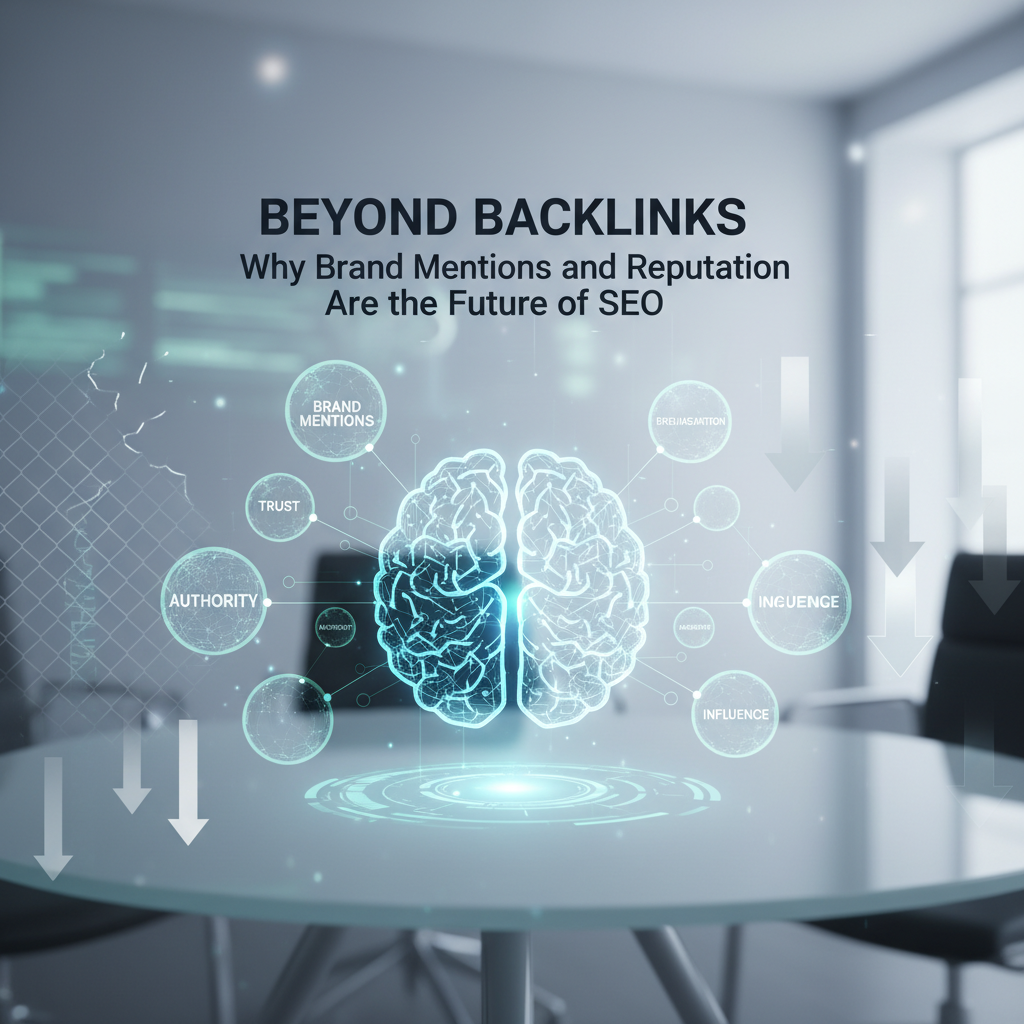

Listen to this post: Beyond Backlinks: Why Brand Mentions and Reputation Are the Future of SEO
Introduction: Beyond the Backlink
For years, the world of Search Engine Optimization (SEO) has been dominated by a singular obsession: backlinks. The logic was simple—more links from other websites meant more authority, which translated to higher rankings on Google. While links remain a crucial part of the puzzle, the ground has shifted beneath our feet. The relentless pursuit of backlinks above all else is becoming an outdated strategy.
Google’s semantic understanding of the web has fundamentally re-engineered the signals it uses to determine authority. It no longer just counts links; it weighs the context, sentiment, and prominence of online conversations. In this new landscape, what people say about your brand online—even when they don’t include a hyperlink—is emerging as one of the most powerful factors in your search visibility. It’s time to look beyond the backlink and focus on building something far more durable: a brand reputation worth talking about.
1. Your Brand’s Name Is a Powerful Keyword, Even Without a Link
At the heart of this evolution is the concept of the unlinked brand mention. This is any online reference to your brand, products, or company that doesn’t include a clickable link back to your website. Think of it as digital word-of-mouth, and in today’s search environment, these mentions function as “implied links.”
For example, imagine a user on Reddit posts a comment in a skincare community:
“I finally tried XYZ’s serum, and now I get the hype. It’s worth the price!”
There’s no link to click, but this is an incredibly valuable signal. It’s a genuine endorsement, and search engines are now smart enough to recognize its weight. With Google’s growing obsession with “entities”—real-world people, places, and brands—these unlinked mentions are becoming just as meaningful as traditional backlinks. This shift creates a new strategic imperative: SEO efforts must now be integrated with brand-building and PR, moving from a purely technical discipline to a holistic reputation management function.
2. Google Is Learning to “Read” the Web Like a Human
How can Google possibly understand the value of a mention without a hyperlink to follow? The answer lies in sophisticated technologies that allow search engines to interpret language and context with near-human accuracy. These systems work together to build a comprehensive picture of your brand’s reputation.
- Natural Language Processing (NLP): This is the technology that helps Google read and understand everyday language, not just keywords. NLP allows Google to analyze the tone and sentiment of a mention, distinguishing between a positive recommendation like “this toner is so calming” and a negative complaint like “this cleanser is stripping my skin barrier.” It understands the context and intent behind the words.
- Entities: In SEO, an entity is a specific, recognized “thing” or concept, such as a person, a product, or a brand. When your brand is mentioned consistently and positively across the web, Google begins to treat it as a known entity, not just a random keyword. This elevates your status in its index, lending more weight to conversations about you.
- The Knowledge Graph: Think of the Knowledge Graph as Google’s digital “brain” or scrapbook. It’s a massive network that connects your brand entity to related topics, concepts, and search queries. For example, if your brand “XYZ” is repeatedly mentioned in conversations about “barrier repair” or “sensitive skin,” the Knowledge Graph connects those dots, establishing your brand as an authority in that niche.
This fundamentally changes resource allocation for SEO. The budget once reserved for acquiring low-tier links should now be redirected toward community management and digital PR, as authentic conversations on relevant forums are now a measurable asset.
3. Your Online Reputation Is a Measurable Ranking Factor
Google’s framework for measuring a brand’s credibility is known as E-E-A-T, which stands for Experience, Expertise, Authoritativeness, and Trustworthiness. In short, E-E-A-T is how Google determines if your brand is “the real deal” and a reliable source of information or products. Off-page signals are a primary way it makes this judgment.
This is where off-page signals become tangible proof of your E-E-A-T. As the Search Engine Land source details, every mention in an authoritative skincare guide or recommendation from an expert serves as a trust signal. This is reinforced by the Bluehost source, which identifies these external validations—from high-quality backlinks to brand mentions—as the primary way Google evaluates a site’s authoritativeness and trustworthiness from the outside in. Each instance reinforces that your brand has experience, demonstrates expertise, and is worthy of trust.
“Your customers search everywhere. Make sure your brand shows up.”
This reframes SEO as more than a technical game. The strategic imperative is to build genuine trust and authority that modern search engines are now equipped to detect, measure, and reward with higher visibility.
4. Social Media Influences SEO, Just Not How You Think
There is a persistent myth that social signals—likes, shares, and follower counts—are a direct ranking factor for Google. The reality is more nuanced. Google has stated that these metrics are not a direct input for its ranking algorithm, partly because such data can be flawed, and more importantly, because Google does not have full, unrestricted access to the internal data of all social media platforms. However, social media has a powerful indirect influence on your SEO performance.
The real value of social media for SEO comes from its ability to generate broader online conversations. Here’s how it works:
- Building Presence: Public social media mentions are crawlable by Google. As former Google engineer Matt Cutts explained, these pages are treated “like any other pages in our web index.” Crucially, even though Google can’t see every post, public mentions help build your brand’s overall digital footprint and can lead to conversations on other blogs or forums that Google trusts.
- Driving Traffic and Links: An active social media presence drives traffic to your website. The more people who visit your content, the higher the chance that one of them—a blogger, journalist, or creator—will link to it organically from their own site.
- Increasing Brand Awareness: Strong social media activity makes more people aware of your brand. This, in turn, leads to an increase in both branded searches and unlinked brand mentions on other websites, blogs, and forums that Google values.
The strategic takeaway is that the goal on social media is not to directly game the search algorithm. Instead, it’s to build a vibrant community and spark conversations that spill over into other parts of the web. Ultimately, this creates a powerful flywheel effect: the community built on social media directly fuels the branded search activity that Google interprets as a key signal of authority, a concept we’ll explore next.
5. Getting People to Search for You Is an SEO Strategy
One of the most powerful off-page signals you can cultivate is a “branded search.” This occurs when a user types your business name directly into the search bar. A high volume of branded searches is a clear indicator to Google that your brand is a recognized and authoritative entity in its niche. People don’t search for brands they don’t know or trust.
So, how do you encourage more people to search for you directly?
- Run brand awareness campaigns: Use social media ads and content marketing to make your brand name memorable and top-of-mind. For example, the coffee roaster Blue Bottle Coffee ran ad campaigns showcasing their unique brewing process. This didn’t just sell coffee; it prompted users to search for terms like “Blue Bottle cold brew,” signaling strong brand recognition to Google.
- Create memorable, shareable content: Develop content that is so valuable or entertaining that it becomes synonymous with your brand, encouraging people to seek you out directly for information.
This is a powerful, long-term strategy because it shifts the focus away from chasing algorithm updates and toward building a durable brand that people actively seek out. When customers trust you enough to search for you by name, you are no longer just a result on a search page—you are the destination.
Conclusion: Your Brand Is Your Best Backlink
The landscape of SEO is undergoing a fundamental transformation. What was once a discipline heavily focused on technical tactics and link acquisition is now evolving to reward something far more meaningful: brand reputation. Google is getting better at listening to the web’s authentic conversations, and it values the trust, authority, and experience that real people attribute to your brand.
Backlinks are not obsolete, but they now share the stage with a new cast of authority signals. Unlinked mentions function as implied endorsements, a high volume of branded searches proves you are a destination, and social buzz creates the ripples that Google’s entity-focused algorithm is built to detect. The future of SEO belongs not to those who can build the most links, but to those who can build the best reputation.
If Google values authentic conversation, how will you change your strategy to not just build links, but to build a brand worth talking about?