


Listen to this post: The Future of Work in Developing Countries as AI Spreads
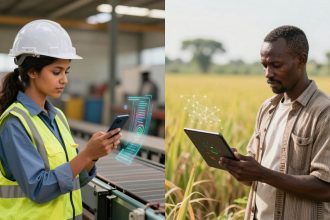
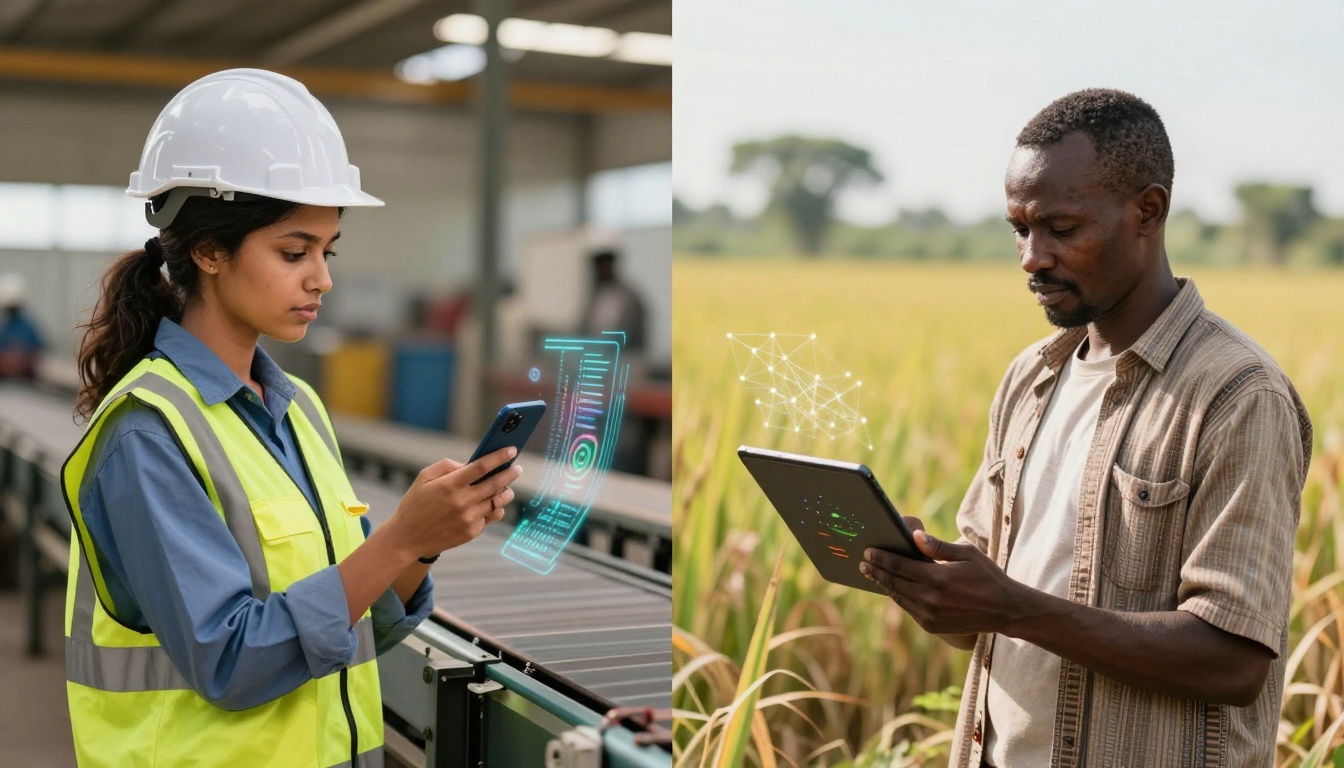
Picture a factory worker in Mumbai. She scans parts on an assembly line with a smartphone app that spots defects in seconds. Or think of a farmer in Kenya. He checks soil data on his phone to boost crop yields. AI tools like these now reach everyday jobs in India, Africa, Latin America, and Southeast Asia.
Reports from early 2026 paint a clear picture. AI takes over routine tasks, but it sparks more new jobs than it ends. The World Economic Forum sees a net gain of 78 million positions by 2030 worldwide. The IMF agrees. Yet challenges loom large. Workers need skills in analytical thinking and AI basics to thrive.
Developing countries face a unique mix of risks and chances. Youth unemployment already bites hard. AI speeds that up without quick fixes. But with smart steps, these nations can turn tech into a boost for local talent. Let’s break down the shifts ahead.
Jobs AI Puts at Risk in Emerging Economies
AI hits routine roles first in places with lots of entry-level work. Data entry clerks tap away less as software handles it. Assembly lines in Vietnam factories slow down with robot arms. Cashiers in Brazilian shops fade as self-checkouts rise. Call centres in the Philippines see fewer shifts. Basic logistics drivers in Nigeria face apps that route trucks alone.
In India, banking back offices shrink fast. Thousands of jobs vanish as chatbots answer queries. Africa’s manufacturing hubs like Ethiopia lose ground too. Southeast Asia reports a 65% drop in assembly posts over five years. Latin America’s retail sees cashiers cut by half in big chains. The IMF warns low readiness makes it worse. These economies lack the tech base to bounce back quick.
Companies skip retraining. They hire staff ready for AI from day one. This squeezes new workers most. The WEF predicts 40% of skills will change by 2030. Youth in developing spots bear the brunt.
Why Young Workers Feel the Pinch First
New grads chase starter jobs like IT help desks or delivery runs. AI apps fix bugs and plot routes better. A young graduate in Lagos scans job sites daily. No bites without AI know-how. Studies show a 3.6% employment drop in high-AI zones after five years. Firms cut hires for fresh talent. They pick pros who blend human smarts with tech.
The Skills Gap That Holds Countries Back
Many lack AI literacy or data skills. Tech access stays spotty in rural spots. Employers want staff who mix creativity with tools, but few fit. Reports show emerging markets trail rich nations by years. See the IMF’s note on bridging skill gaps for details. This gap stalls growth and leaves talent on the bench.
New Roles AI Creates That Locals Can Grab
AI does not just cut jobs. It births fresh ones, often more than it takes. Expect 170 million new posts globally by 2030, with 92 million lost. Net win: 78 million. Developing areas snag a big share. AI health pros surge 180%. Education roles jump 150%. Robotics techs climb 125%. Customer experience designers rise 90%.
India’s fintech firms hire risk analysts who use AI to spot fraud. In Africa, drone pilots map farms; AI tutors guide kids in slums. Latin America’s e-shops need designers for virtual stores. Southeast Asia trains robotics fixers for factories. Frontline spots like nurses and teachers expand too. AI handles grunt work, so humans focus on care.
Youth turn into superworkers with short training. A nurse in rural Peru learns AI diagnostics in weeks. She spots illnesses faster, saves lives. LinkedIn data shows AI added 1.3 million jobs already. Emerging spots like India lead hiring growth.
Boom in Health and Education Jobs
AI amps demand here. Tools scan X-rays, but nurses interpret results. Picture an Indian clinic nurse. She feeds patient data into an app, gets tips, then chats with families. Growth hits 180% for such roles. African teachers use AI lesson plans. They tailor classes to kids’ needs, upping scores. That’s a 150% rise. Check the IMF blog on AI reshaping skills.
What Lies Ahead by 2030 and How to Prepare
By 2030, productivity soars in smart spots. AI lifts output, but only with skills and wires in place. Developing countries risk divides without action. Inequality grows if youth sit idle while elites grab gains.
Governments must fund training hubs. Companies upskill teams, back frontline roles. Infrastructure like broadband matters. The UNDP calls for humans to team with AI, not fight it. 39% of skills shift by 2030, so lifelong learning fits all.
Hope runs high. Low-income folks see AI as a pal: 70% expect productivity bumps. With steps, these nations lead. Picture bustling markets where locals run AI-boosted stalls.
Smart Moves for Governments and Firms
Build AI centres in cities and towns. Spark startups with grants. Roll out cheap internet. The IMF pushes innovation rules. Firms offer apprenticeships. Pair vets with newbies on tools. This closes gaps fast. See WEF views on AI across industries.
Workers grab basics now: free online courses in data or prompts. Youth in developing spots hold the edge with quick uptake.
Jobs change, but chances grow. AI ends drudgery, frees hands for real work. Routine tasks fade, yet care roles, tech fixes, and creative spots bloom.
Start today. Learn one AI tool this week. It opens doors. Share your take in comments: how’s AI hitting your job hunt? Check CurratedBrief for more on tech shifts in work. Thriving markets await those ready. In vibrant Indian tech parks or Kenyan farms, locals lead with AI at their side. The future looks bright for those who adapt.