



Listen to this post: Why Switching Your Closet Over for Fall Takes Longer Than It Should
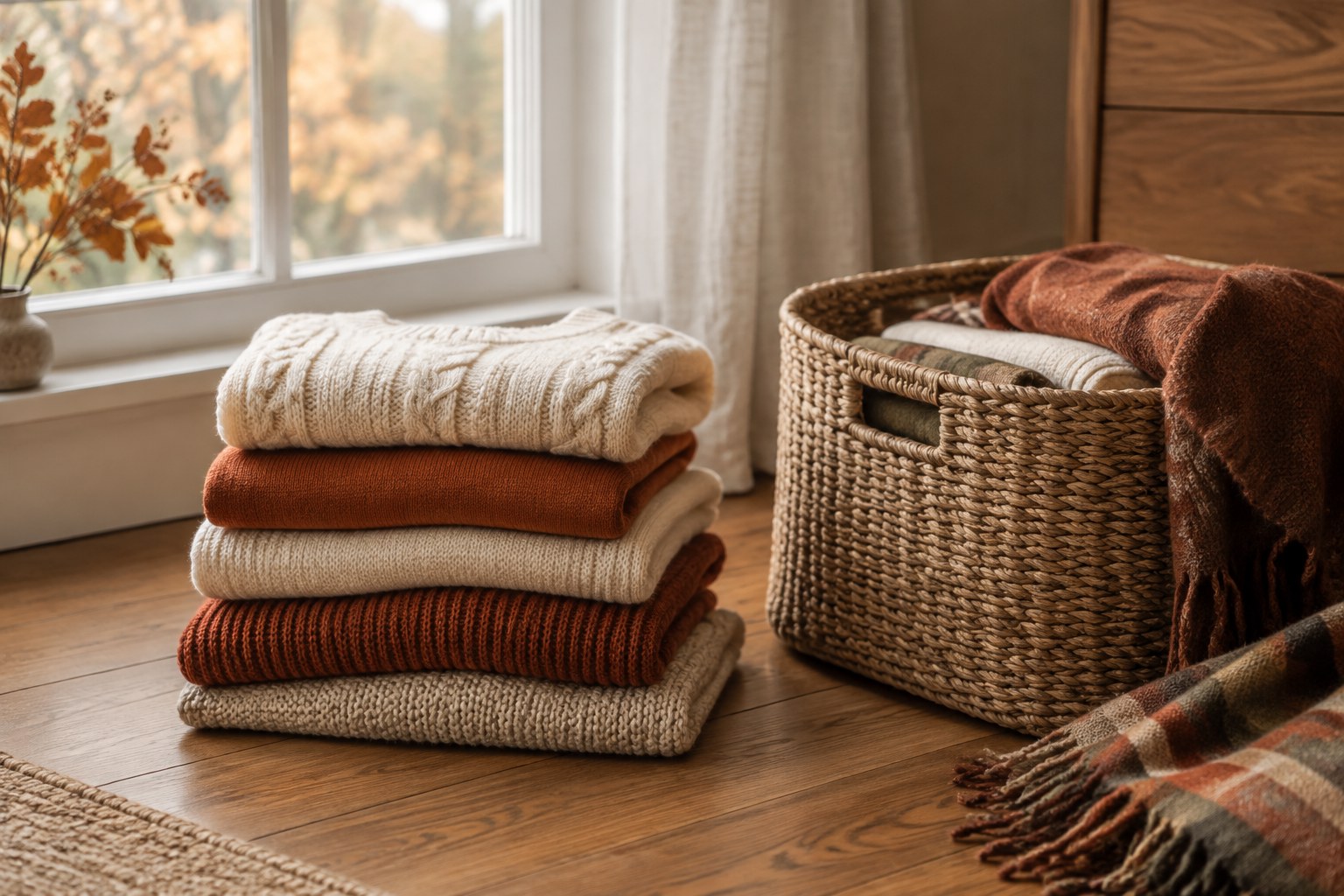
There’s a particular Saturday that comes around twice a year, usually announced by the first properly cold morning or the first day you sweat through a shirt by 10am. You pull the storage bins down from the top shelf, and for about twenty minutes it feels simple: summer things in, warm things out. Then you actually open the bins, and the whole afternoon quietly falls apart.
Because what’s in there isn’t just “warm clothes.” It’s a wool coat you forgot you owned, three jumpers you bought in a January sale and wore once, and a cardigan with a hole in the elbow you’ve been meaning to mend for two winters running. The seasonal swap isn’t really a swap. It’s a confrontation with everything you didn’t think about for the last six months, and that’s the part that eats the afternoon.
None of this is a complaint about owning too much, exactly. It’s more that storage has a way of flattening a wardrobe into one undifferentiated mass. Everything in the bin gets the same twenty seconds of consideration, whether it’s a coat you wear every week in January or something you bought for one wedding two years ago and never touched again. By the time you’re three bins in, you’re not really evaluating clothes anymore, you’re just trying to finish.
The sorting is the whole job, not a step in it
Most advice about seasonal wardrobe changeovers treats the actual swap as the task and the sorting as a minor detail you’ll handle along the way. In practice it’s the reverse. Moving clothes from a bin to a rail takes ten minutes. Deciding, item by item, whether something still fits, still suits you, or was ever actually worn is the thing that turns a tidy Saturday morning into a floordrobe that stays out until Tuesday.
There’s a reason this feels harder than it should: by most estimates, people regularly wear something close to half of what’s in their closet, which means the other half is exactly the stuff you’re now holding up and squinting at, trying to remember if you still like it. It’s not a willpower problem. It’s that nobody can accurately recall the contents of a few hundred garments from memory, especially not ones that have been out of sight since spring.
Knowing what you have before it goes back in a box
The thing that actually shortens this ritual isn’t a better bin or a labelling system, although both help. It’s going into the swap already knowing what you own, instead of discovering it fresh each time a bin gets opened. A few people I know have started doing a quick pass with their phone before anything gets packed away for the season — photographing each piece once, so there’s an actual visual record of the wardrobe rather than a guess. It’s the same idea behind an app like Wear It, which exists mainly to catalogue your clothes so you can see all of them at a glance instead of relying on memory. Used that way, right before a seasonal swap, it turns “what even is in this bin” into something you can check in ten seconds instead of relitigating by hand.
That small bit of visibility changes what the sorting decisions actually look like. Instead of holding up a jumper and trying to remember if you wore it, you can see that you already own four nearly identical grey jumpers and genuinely needed none of them this winter. The donate pile gets easier to fill, not because you’ve become more ruthless, but because the information finally matches reality.
You don’t need a capsule wardrobe to fix this
None of this requires going full minimalist or committing to a ten-piece rotation, which is the advice that gets handed out most often and which most people quietly ignore within a season. If you like having options, keep having options. The fix for a swap that drags on is smaller than a lifestyle overhaul: know what you’re storing, know what you’re pulling back out, and let the twice-a-year ritual actually tell you something useful about how you dress, rather than just moving boxes from one shelf to another.
It also means the clothes you do keep get worn more, which is really the point of the whole exercise. A wardrobe you can actually see tends to get used more evenly, instead of narrowing down to the same five reliable pieces while everything else quietly waits its turn. The swap stops being an annual act of archaeology and starts being more like checking in on something you already know well.
Do the photographing or cataloguing once, on a weekend when you’re not racing the weather, and every swap after that gets a little shorter. The bins stay the same size. What changes is that you stop being surprised by what’s in them.