
Listen to this post: How to Create a Weekly Cleaning Routine That Actually Works
Monday morning can feel like a fresh notebook. The kitchen sides are clear, the loo smells fine, and the floor doesn’t stick to your socks.
Then Friday rolls in like a muddy dog. Post on the table, crumbs in the corners, laundry in a half-built mountain, and a bin that’s quietly plotting against you.
A weekly cleaning routine that works isn’t about a perfect home. It’s about a home that feels good to live in, even when work is busy, kids are loud, pets are shedding, and you’re running on low battery. The sweet spot is simple: small daily resets, one focused task each weekday, and one rotating deep clean so nothing gets left for “someday”.
Start with your real week, not an ideal one
The best routine is the one you’ll repeat without negotiating with yourself. If you build a plan for an imaginary version of you (the one who wakes up early, loves mopping, and never gets interrupted), it won’t last.
Start with what’s true:
- How many people live in your home?
- What mess shows up fastest?
- When do you have the most energy, mornings or evenings?
- Which days are already full?
Consistency beats the big weekend clean that leaves you sore, fed up, and right back where you started by Wednesday.
Do a 10-minute home check so you know what matters
Set a timer for 10 minutes. Walk through your home with your phone notes open. Don’t clean yet, just notice.
Focus on five areas:
- Kitchen: counters, sink, hob splatters, fridge smells
- Bathroom: toilet, sink, mirror, towels, limescale spots
- Floors: crumbs, pet hair, sticky patches
- Laundry: where it piles up, how often you run out of socks
- Clutter hot spots: entryway, dining table, the chair that collects clothes
Write down the top three that affect daily comfort most. Think smells, sticky floors, overflowing bins, and the sink that never looks “done”.
One key rule: declutter first. Cleaning a surface covered in stuff is like trying to paint a wall without moving the furniture. Clear it, then clean it. You’ll cut your time in half.
If you want another take on setting up a workable schedule, Get Set Clean’s guide to building a weekly cleaning plan is a solid reference point, especially for prioritising what matters.
Choose your routine style: task-by-day or room-by-day
Most weekly cleaning routines fall into one of two styles. Both work. One will feel more natural to you.
Task-by-day means you do one type of job across key areas.
- Example: Tuesday dust, Wednesday vacuum, Thursday mop.
This suits you if you like repetition and simple tools. You can keep the same cloth or vacuum out and move through the house.
Room-by-day means you focus on one room (or zone) at a time.
- Example: Wednesday bathroom, Thursday kitchen.
This suits you if you like the satisfaction of “finishing” a space and shutting the door on it.
A clear rule: pick the style that’s easiest to start and easiest to repeat. The best routine isn’t the most detailed one, it’s the one you’ll do when you’re tired.
Build the routine around daily basics that stop mess piling up
Weekly routines fail when they try to do weekly work every day. The daily basics are not a full clean. They’re small moves that stop the mess from breeding overnight.
Think of it like brushing your teeth. You don’t do it once a week and hope for the best. You do a little, often, because future-you deserves it.
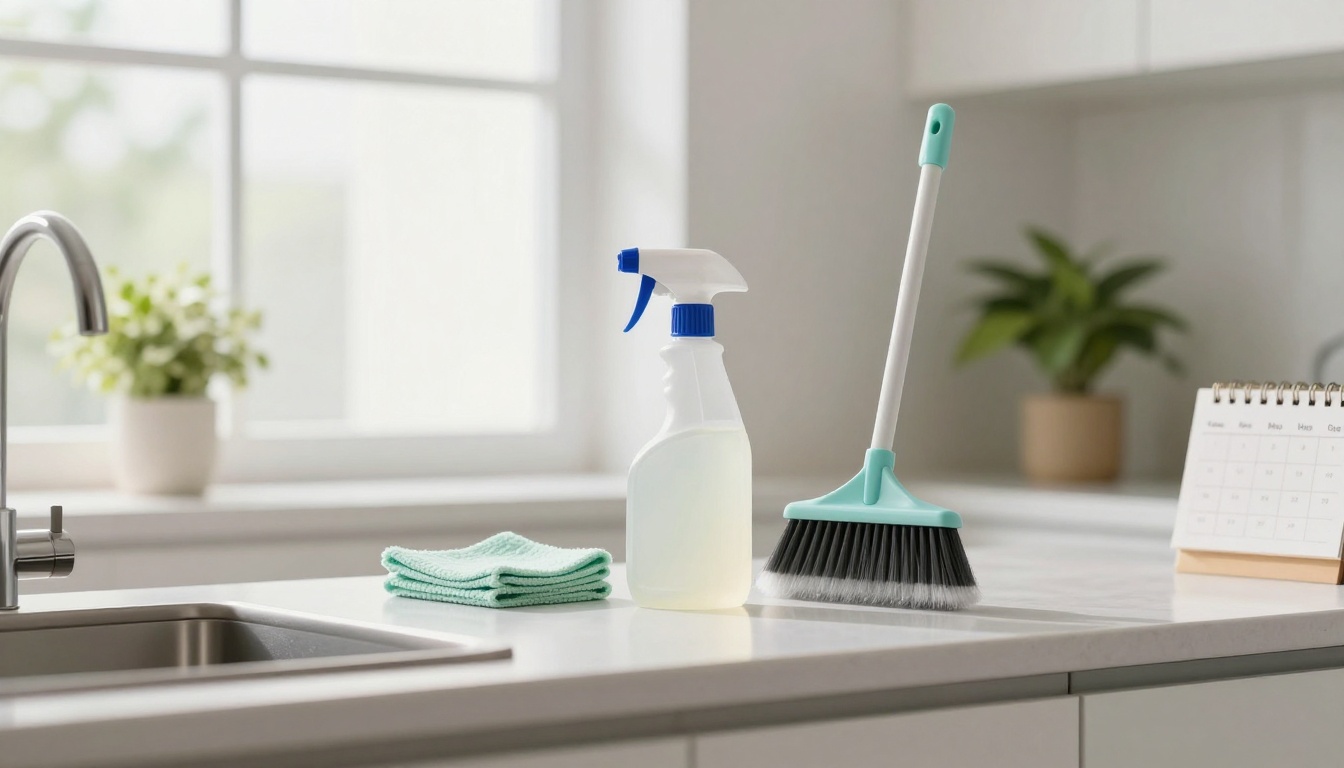
Helpful tools can make this easier without turning your home into a cleaning aisle:
- Microfibre cloths (one for kitchen, one for bathroom)
- A small “grab-and-go” caddy with spray, cloth, bin bags
- A robot vacuum run on a schedule, if you have one
- A steam cleaner for floors or tiles, if you prefer cleaning with water and heat
Trends in early 2026 have leaned hard into low-effort habits and smart help. The goal is less scrubbing drama, more steady upkeep.
Pick 3 to 5 daily ‘non-negotiables’ that take 15 minutes or less
Choose a short list you can do even on a weekday evening when your brain is mush. These are your anchors. Keep them realistic.
Pick from these, then commit:
- Make beds (or just pull the duvet up neatly)
- Load or unload the dishwasher
- Wipe kitchen counters and the hob splash zone
- Quick bathroom sink wipe (30 seconds is fine)
- 5-minute sweep in the kitchen (crumbs love corners)
- One load of laundry start-to-finish (wash, dry, put away)
- A 2-minute “tidy basket” per room (things go in, you sort later)
A simple way to make it stick is to pair tasks with something you already do:
- After breakfast: load dishwasher, wipe counter
- While kettle boils: quick sink wipe
- Before bed: 5-minute floor sweep, tidy basket
If you like seeing a more detailed daily and weekly breakdown, The Spruce’s realistic weekly cleaning schedule can help you compare ideas and borrow what fits.
Set up your space so cleaning is the easy option
Most “I don’t have time” moments are really “I can’t be bothered to go find the thing”.
Set your home up so the right choice is the lazy choice:
- Keep sprays and cloths where you use them (bathroom spray in the bathroom)
- Store a small roll of bin liners in the bottom of each bin
- Put a laundry basket where clothes actually land
- Create a “drop zone” tray for keys, post, school letters
- Leave the cleaning caddy visible (not hidden behind ten other things)
When your tools live in the right spot, cleaning stops being a project and becomes a quick action.
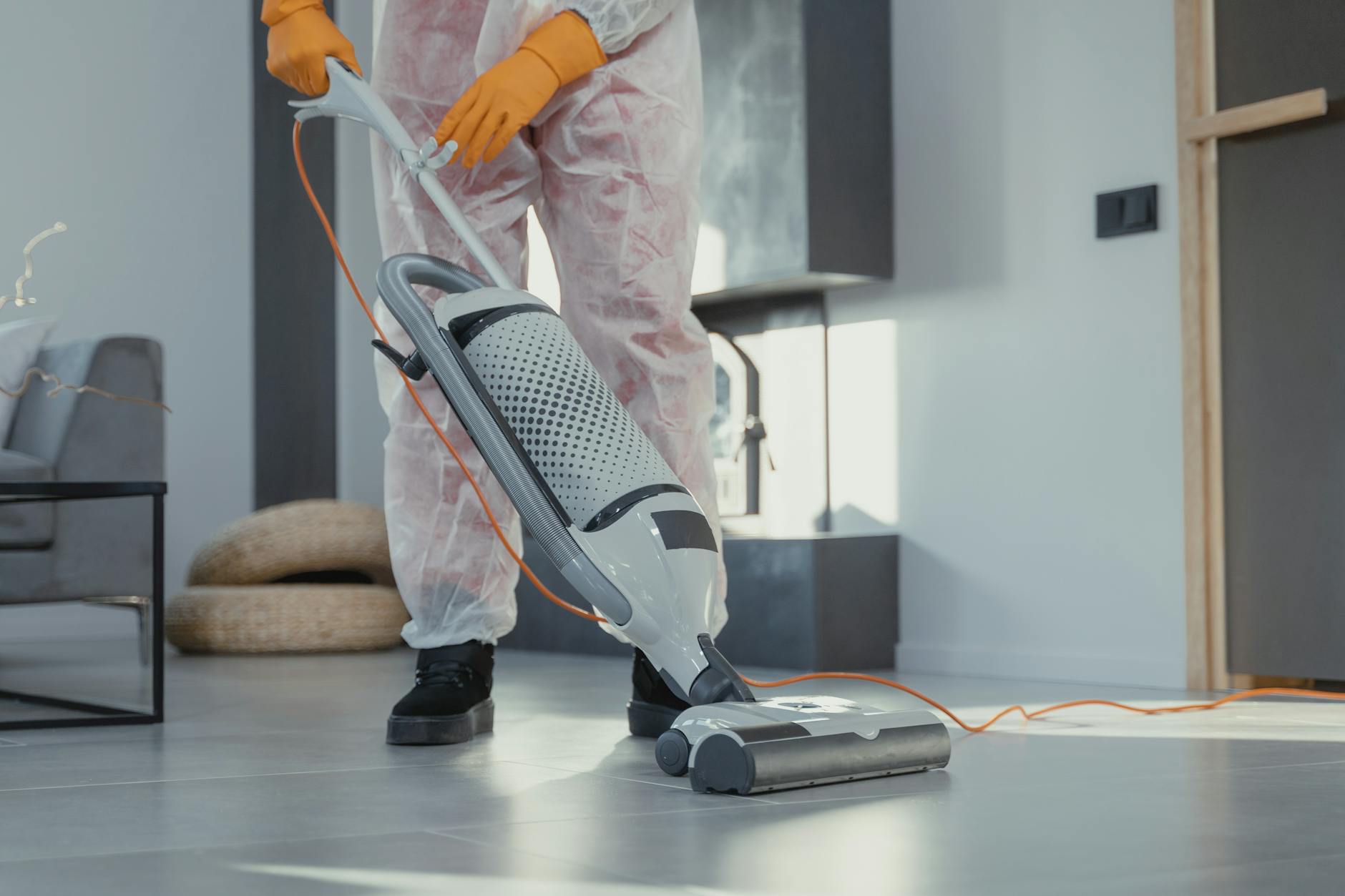
Photo by Tima Miroshnichenko
Create your weekly plan (with a copy-and-paste schedule)
A good weekly cleaning schedule has three parts:
- Daily basics (short, steady)
- One focused task per weekday (10 to 20 minutes)
- One rotating deep clean (30 to 45 minutes)
Your week doesn’t need to look like anyone else’s. If Tuesdays are chaos, don’t assign yourself the hardest job on Tuesday. Move it. The routine should fit your life, not the other way round.
A simple weekly schedule most homes can follow
Use this as a starting point. Keep each weekday task small enough that you can do it while dinner cooks or before you sit down.
Daily (10 to 15 minutes)
- Dishes and counters
- Quick tidy basket
- One small floor sweep if needed
Monday: Bathrooms quick clean (10 to 20 minutes)
- Toilet (quick scrub)
- Sink and taps
- Mirror
- Swap towels if needed
Tuesday: Dust and wipe surfaces (10 to 20 minutes)
- Living room surfaces
- Bedroom side tables
- TV stand, shelves you touch often
Wednesday: Vacuum or sweep main areas (10 to 20 minutes)
- Hallway, living room, kitchen
- Stairs if you have them
- Pet hair zones first
Thursday: Mop or wash floors (10 to 20 minutes)
- Kitchen floor
- Bathroom floor
- Spot clean sticky patches elsewhere
Friday: Catch-up and bins (10 to 20 minutes)
- Empty bins and recycling
- Clear fridge of obvious old bits
- Put away anything that’s drifted into the wrong room
Weekend: Sheets, towels, and a reset (30 to 45 minutes)
- Wash bedding and towels
- Quick reset of clutter hot spots (entryway, table, sofa area)
If you want more ideas for arranging tasks by modern life rhythms (work, school, weekends), PureWow’s weekly cleaning schedule is useful for seeing other ways to group chores.
Add one rotating deep clean each week so nothing gets ignored
This is the part that stops that nagging feeling of “I never clean properly”. You will, just not all at once.
Follow the one big job rule: pick one deep-clean task each week, set a timer for 30 to 45 minutes, stop when it goes off.
Rotating deep clean ideas:
- Clean fridge shelves and drawers
- Wipe inside the oven door and knobs
- Skirting boards in one room
- Wash inside bins
- Clean windows in one area
- Declutter one drawer (the messy one)
- Clean sofa cushions and under cushions
- Wipe doors, handles, and light switches
- Descale the kettle
- Organise the pantry shelf you avoid
Heavier jobs don’t need to be weekly. Some are monthly or quarterly, like washing curtains, deep-cleaning carpets, or sorting cupboards. The routine should keep your home comfortable, not steal your weekends.
For another perspective on building a schedule you can live with, this weekly cleaning schedule from Mom Managing Chaos is good for mindset and follow-through, especially if you’ve tried and quit before.
Make it stick when life gets busy
A routine is only real when it survives the messy weeks. Travel, deadlines, sick kids, dark winter evenings, low mood, it all counts.
The trick is to build a plan that has a “normal” version and a “minimum” version. You’ll use both.
Use a ‘minimum version’ for hard weeks
Your minimum plan is the cleaning equivalent of toast for dinner. Not fancy, but it keeps things steady.
When you’re stretched thin, do just this:
- Dishes (or at least clear the sink)
- Wipe kitchen counters
- Toilet and bathroom sink wipe
- Take out rubbish and recycling
- 5-minute clutter sweep (one basket, one bag)
This prevents the spiral. You won’t face a scary catch-up weekend, and you can restart your usual routine without guilt.
A helpful mindset: you’re not failing the routine, you’re using the version designed for this week.
Share the load and keep score without nagging
If you live with other people, the home belongs to everyone, so the work should too. Sharing the load doesn’t require long talks or complicated charts.
Keep it simple:
- Kids (age-appropriate): tidy toys, wipe the table, pair socks, put laundry in baskets
- Teens: vacuum a room, empty bins, clean the bathroom sink, load dishwasher
- Adults: own a zone (kitchen close, floors, bins, bathroom)
The quickest win is ownership. One person owns one zone. If one person owns bins, bins get done. If everyone “helps”, it often means nobody remembers.
A visible checklist can help without turning you into the household manager. Put it on the fridge, a notes app, or a shared phone reminder. Keep it neutral, short, and focused on what needs doing, not who didn’t do it.
Conclusion
A weekly cleaning routine that works is built on reality, not wishful thinking. Choose a routine style that feels easy, lock in a few daily basics, add one small task per weekday, and rotate one deep clean so the awkward jobs don’t pile up. Keep a minimum plan for hard weeks, and the house won’t tip into chaos.
Start today with one small move: pick just three daily non-negotiables, then choose the best day for bathrooms. Save the schedule, try it for two weeks, then adjust it based on what actually happened in your home.