

Listen to this post: Why Staying Up Late Feels Like Winning Your Day Back
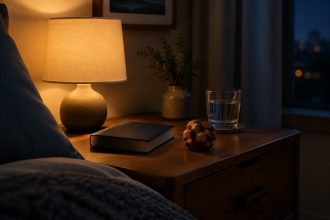
It’s almost midnight, you have to be up in six hours, and you are, for no particular reason, still awake. Not watching anything good. Not finishing anything useful. Just scrolling, tab to tab, in a way that doesn’t even feel like enjoyment anymore — more like refusal. Ask anyone who does this and they’ll usually say some version of the same thing: they know they should be asleep. They’re just not ready to let the day end yet.
There’s a name for this, and it’s an oddly satisfying one: revenge bedtime procrastination. Researchers use it to describe the habit of delaying sleep not because you’re tired and fighting it, but as a kind of quiet retaliation against a day that felt like it belonged to everyone except you. One recent survey put a number on it — Americans estimated they lose hundreds of hours a year to exactly this, lying in bed scrolling through things they don’t especially care about, long after they meant to turn the light off.
The day was never really yours
The “revenge” part of the phrase is doing most of the work. The people who report this habit most are usually the ones with the least control over their daytime hours — parents, shift workers, anyone whose schedule is mostly set by other people’s demands. By the time the last email is answered and the last small task is done, bedtime is often the first moment all day that’s genuinely optional. Staying up late, even to do something as unremarkable as scroll, becomes a way of claiming a few minutes back. The logic isn’t really about rest. It’s about agency.
That’s worth sitting with, because it reframes the usual advice. Telling someone to “just go to bed earlier” treats the problem as a willpower failure, when it’s closer to a protest. You can’t out-discipline a need for autonomy — you have to give it somewhere else to go.
Why the scroll doesn’t actually pay off
The trouble is that the thing most people reach for to reclaim their evening is almost perfectly designed not to deliver it. A feed has no natural stopping point, which is exactly why it works as entertainment and exactly why it fails as a reward. You can scroll for eleven minutes or ninety and land on roughly the same vague dissatisfaction at the end of either, because nothing about it was building toward a finish. You don’t get the feeling of having spent your reclaimed time on anything. You just get later.
The next-morning cost is the part people tend to underestimate. Sleep researchers are blunt about this: shaving even thirty or forty minutes off the night, repeatedly, shows up as worse mood, worse focus, and — this is the frustrating part — less patience for the very things that made the day feel like someone else’s in the first place. The habit meant to restore a sense of control quietly erodes the exact resources you’d need to actually get some.
Trade the open-ended for the bounded
None of this means the answer is cold turkey on screens, or a strict lights-out rule that ignores why the habit exists in the first place. What seems to help more than discipline is simply changing what’s on offer in that window. The urge underneath all of it usually isn’t “I want to look at my phone.” It’s “I want ten minutes that are mine, where nothing is required of me.” A feed can fake that feeling for a second, but it never actually closes the loop.
Something with a built-in ending does. A few people have swapped the nightly scroll for a short, low-stakes puzzle instead — something like Nestled: Bird Logic Puzzle, designed to be played in small, calm sessions that actually finish rather than refresh endlessly. The appeal isn’t really the puzzle itself so much as the shape of it: you sit with it for a bit, you reach an end, and there’s nothing left pulling you to stay up another ten minutes to see what happens next.
A small rule that holds up
If there’s one change worth trying tonight, it’s this: pick something for the last stretch before sleep that has a finish line built into it, whatever that ends up being for you — a chapter, a crossword, a stretch routine, a puzzle. The point isn’t virtue. It’s that an activity with a natural ending gives your evening something the scroll never could: an actual moment where you get to say that’s enough for today, and mean it.
The day will still, most days, belong mostly to other people’s schedules. But the last twenty minutes of it don’t have to disappear into something that was never going to give you anything back.