



Listen to this post: Why You Keep Receipts You Know You’ll Never Look At Again
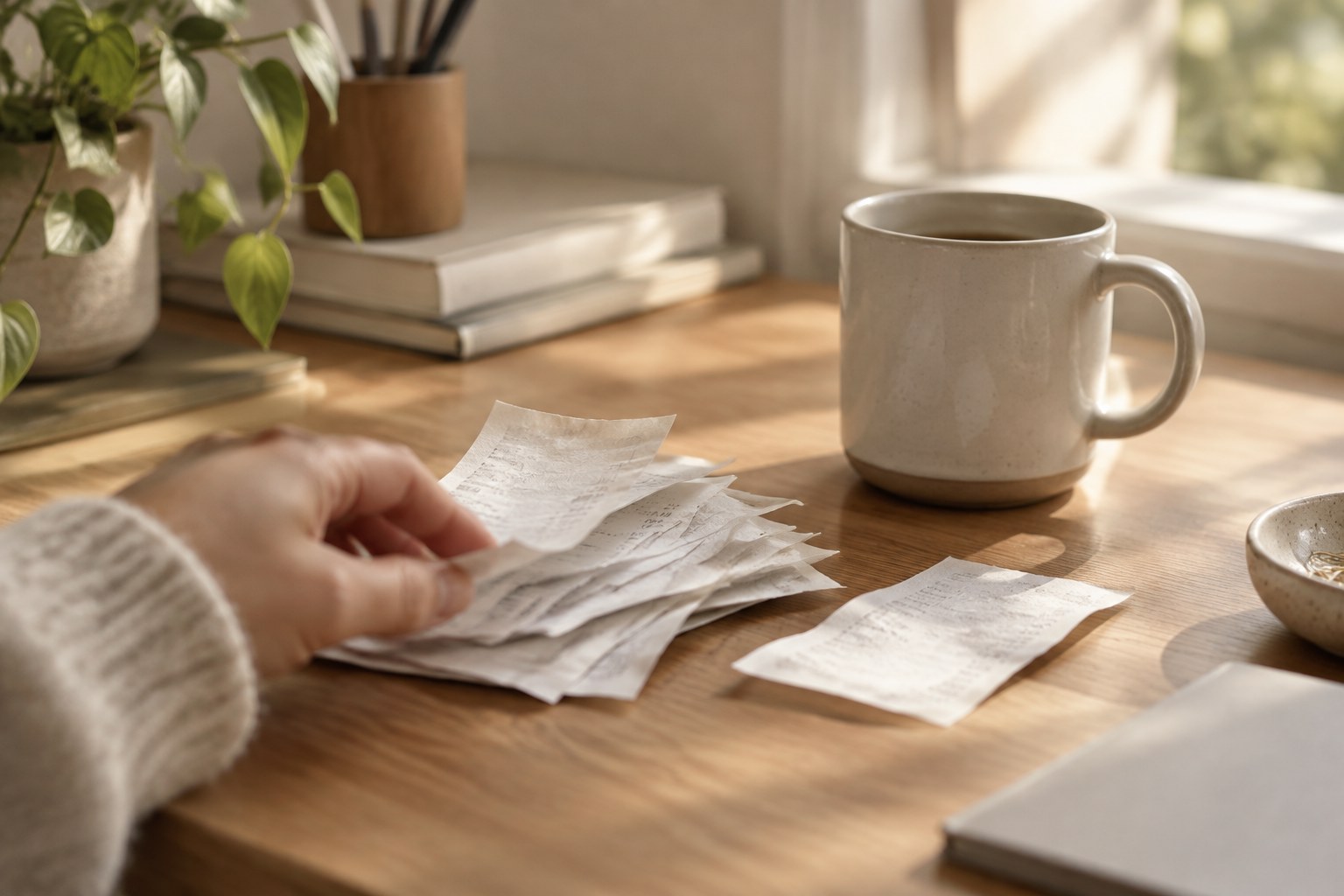
There’s a particular drawer in most homes — or a pocket of a bag, or a shoebox on top of the wardrobe — that exists purely to hold receipts nobody has any real intention of reading again. A coffee receipt from a Tuesday. The slip from a jumper bought two winters ago. A crumpled one for batteries. None of it is filed, none of it is in any useful order, and yet throwing the whole lot out feels oddly reckless, like you’re disposing of evidence you might need one day to defend yourself.
The receipt isn’t really about the purchase
Ask most people why they’ve kept a receipt for a £4 sandwich and they won’t have a good answer, because the honest one is a feeling rather than a reason. Behavioural researchers have a name for the feeling: loss aversion, the fact that losing something — even something as small as the ability to prove you bought a sandwich — registers more strongly than the equivalent gain of a tidy drawer. Throwing a receipt away means closing off a possibility, however unlikely, and most of us are quietly bad at closing off possibilities.
There’s a simpler explanation sitting underneath that one, too: sorting takes a decision, and binning takes a decision, but shoving something in a drawer takes none at all. The drawer isn’t really a filing system so much as a way of deferring the decision indefinitely, which is why it never actually gets any smaller. It just gets refilled.
It doesn’t help that receipts are designed to look identical whether they matter or not. A till roll gives a £300 appliance and a £3 bag of crisps the exact same strip of thermal paper, in the exact same faint grey print that fades within a few months anyway. There’s no visual cue telling you which slip is worth a second thought, so the brain does the laziest thing available and treats all of them as equally important — which, in practice, means treating all of them as equally disposable later, once the pile gets too big to face.
The handful that are actually worth keeping
The useful trick isn’t to become a more disciplined filer. It’s to notice that almost nothing in that drawer needed saving in the first place. A receipt earns its keep if one of three things is true: you might genuinely return the item, the purchase is covered by a warranty worth more than the hassle of a claim, or you need it for tax records. That’s the whole list. A coffee, a magazine, a bag of pasta — none of that needs a paper trail past the walk home.
Once you’re only keeping the receipts that matter, the next problem is remembering what’s actually still covered and what quietly lapsed eighteen months ago without anyone noticing. This is the part paper is genuinely bad at — a drawer doesn’t tell you anything is about to expire, it just sits there looking the same whether the warranty is live or dead. A few people have started photographing the receipts worth keeping instead of filing the paper, using something like Warranty Watch to quietly flag when a return window or a warranty is about to close, rather than finding out the day the thing breaks.
A system that doesn’t ask you to sort anything
The honest version of a receipt system has almost no sorting in it, because sorting is the step everyone abandons by week three. The better habit is a decision made once, at the till or just after: is this one of the few that might matter later? If yes, it gets photographed or dropped in one specific place — a single envelope, a single folder, a single app — immediately, while you still remember what it was even for. If no, it goes straight in the bin before it gets the chance to join the drawer.
The drawer itself is worth one honest pass, done in a single sitting rather than “when you get round to it.” Most of what’s in there will turn out to be months or years past any possible usefulness, and binning it isn’t really a loss — it’s just acknowledging a decision that was already made the moment you stopped needing the thing. What’s left, the genuinely useful handful, finally gets to be something you can put your hand on in under a minute, instead of something you’re vaguely aware exists somewhere in the house.