





Listen to this post: Why You Always Pack Too Much, No Matter How Hard You Try
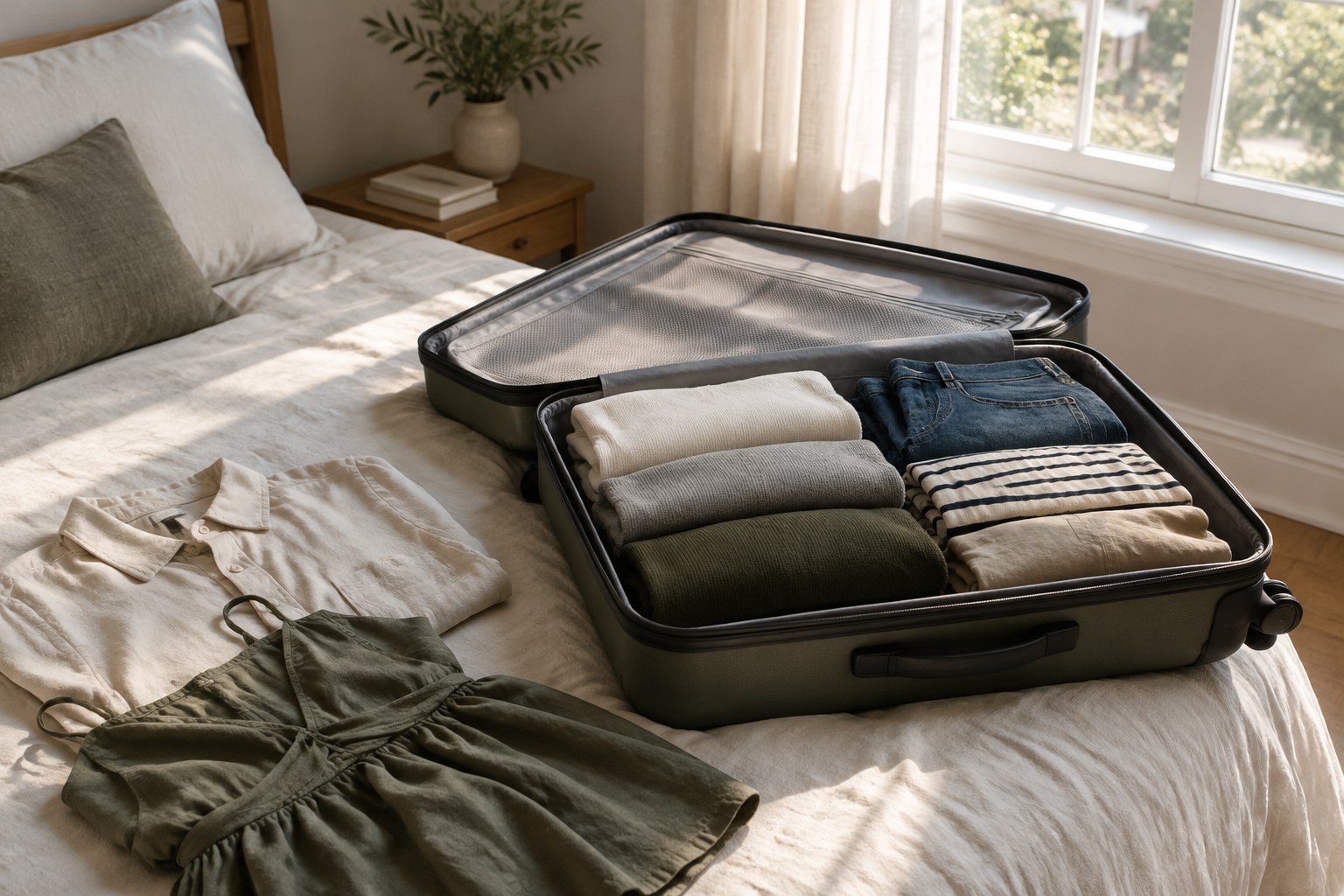
You tell yourself this time will be different. A carry-on only, nothing you have to think twice about, a bag light enough to swing over one shoulder and forget about until you’re through security. Then the actual packing starts, and by the second evening you’re standing over an open suitcase holding a jumper you haven’t worn since March, trying to work out whether the version of you on this particular trip might, this time, actually need it.
It’s not really about the jumper. Almost nobody overpacks because they’re careless, or because they genuinely own too many clothes. They overpack because packing quietly demands something strange of the brain: predict, in specific and practical detail, every situation a future version of you might land in, for days you haven’t lived yet, using a wardrobe you can only half-remember from where you’re standing.
The suitcase is solving the wrong kind of uncertainty
At home, deciding what to wear is mostly automatic. You can feel the weather, you know what’s on the calendar, and you’re choosing from a wardrobe you’ve actually seen recently, which rules most of the guessing out before it starts. A trip removes nearly all of that at once. You don’t know exactly how the weather will behave, what you’ll end up doing on the Tuesday you haven’t planned yet, or which version of the trip — the one where everything goes to schedule, or the one where you end up walking six miles in the rain — you’re actually packing for. So you quietly pack for both.
That’s the real work a suitcase is doing. It isn’t holding clothes so much as holding every plausible version of a week you can’t yet picture clearly. Each “just in case” item is less a wardrobe decision than a small insurance policy against a specific imagined scenario — rain, a nicer dinner than planned, a sudden cold front — that may never actually happen, but costs almost nothing to imagine and therefore feels free to pack for.
Why “just in case” almost always wins the argument
The imbalance is fairly ordinary, as these things go. Researchers who study this kind of everyday decision call it a mild case of loss aversion: the discomfort of imagining yourself cold, underdressed, or caught out without something tends to feel bigger in the moment than the real, physical cost of carrying one more thing. Weighed against each other honestly, carrying an extra jumper for ten days is a trivial burden. Imagined regret doesn’t weigh anything at all, which is exactly why it wins almost every time you hold the two up against each other at 11pm the night before a flight.
Part of what makes this worse while travelling specifically is that you’re also working from memory. At home, you’re rarely guessing blind about what you own or what’s actually been getting worn, because it’s right there, visible, every morning. Packing asks you to reconstruct that same wardrobe from recollection, under time pressure, while also trying to imagine a week you haven’t had yet — which is a lot to ask of anyone’s memory, let alone at the end of a long day. A few people sidestep that part of the problem before they’ve even opened a suitcase, by packing from a version of their wardrobe they’ve already got photographed and sorted on their phone, the same one they use at home — letting an app like Wear It show them what’s actually been getting worn lately, rather than packing from memory and over-correcting out of nerves.
What actually makes a lighter bag feel safe to trust
The fix isn’t really about owning less, and it isn’t about becoming the kind of traveller who’s proud of fitting a fortnight into one bag. It’s closer to a small change in what you’re optimising for. Pack by outfit instead of by category — five or six full combinations you already know work, rather than every top that might theoretically go with every bottom — and the bag stops growing by category creep, which is usually where the real bulk comes from.
It also helps to lean on what’s already proven itself recently rather than what you’re hoping might get worn. The shirt you’ve reached for three times this month is a safer bet for a trip than the one that’s been waiting for the right occasion since last spring. That’s a different filter than “might I need this,” which is the one that got you here in the first place, and it’s a lot harder to argue your way around at eleven at night with a bag that won’t quite close.
None of this guarantees a trip where you never once wish you’d brought one more thing. It just means the version of you who actually goes on the trip gets to travel roughly as light as the version of you at home already manages to live — which, most weeks, turns out to be lighter than the packing anxiety gives it credit for.